
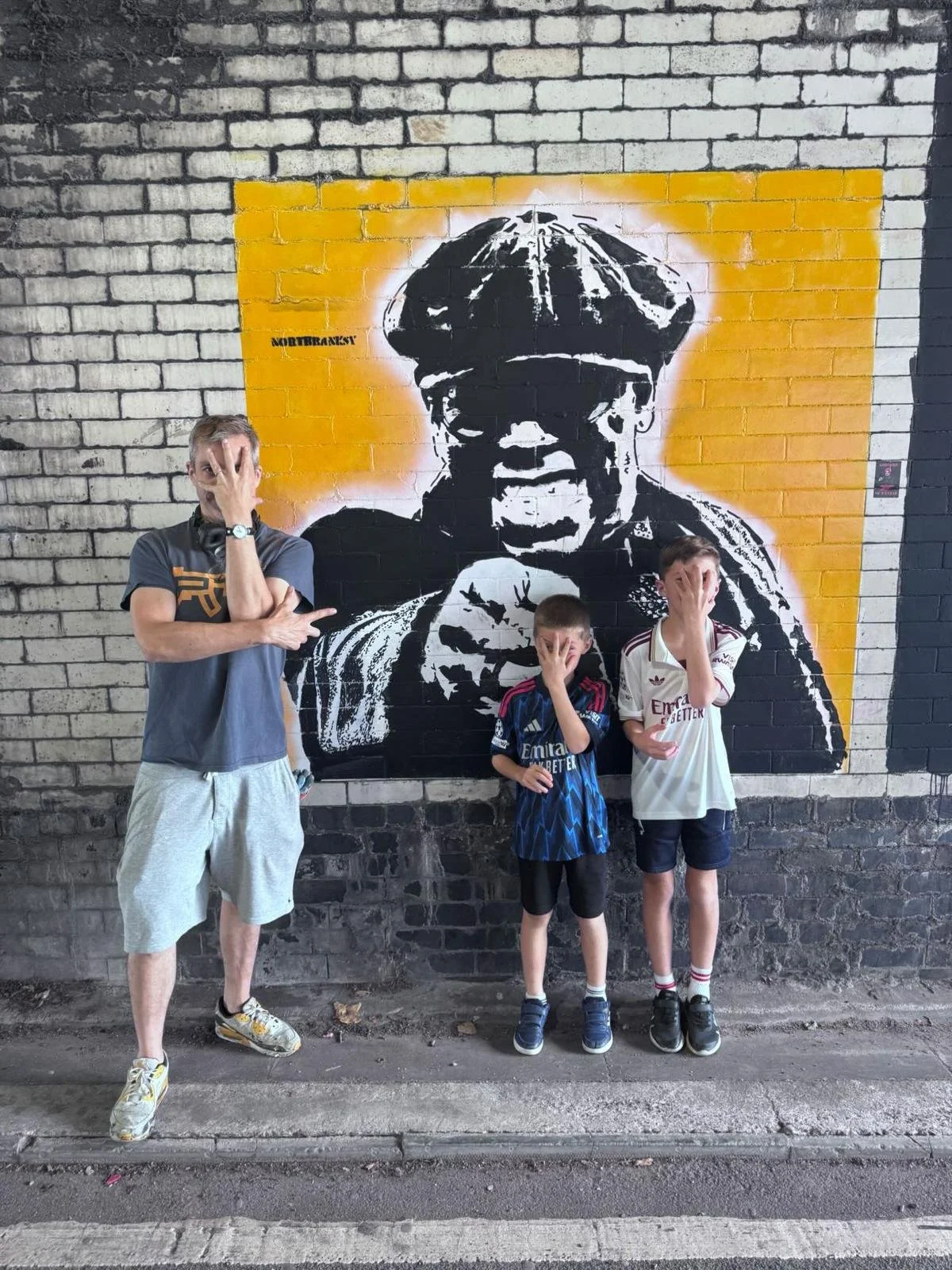
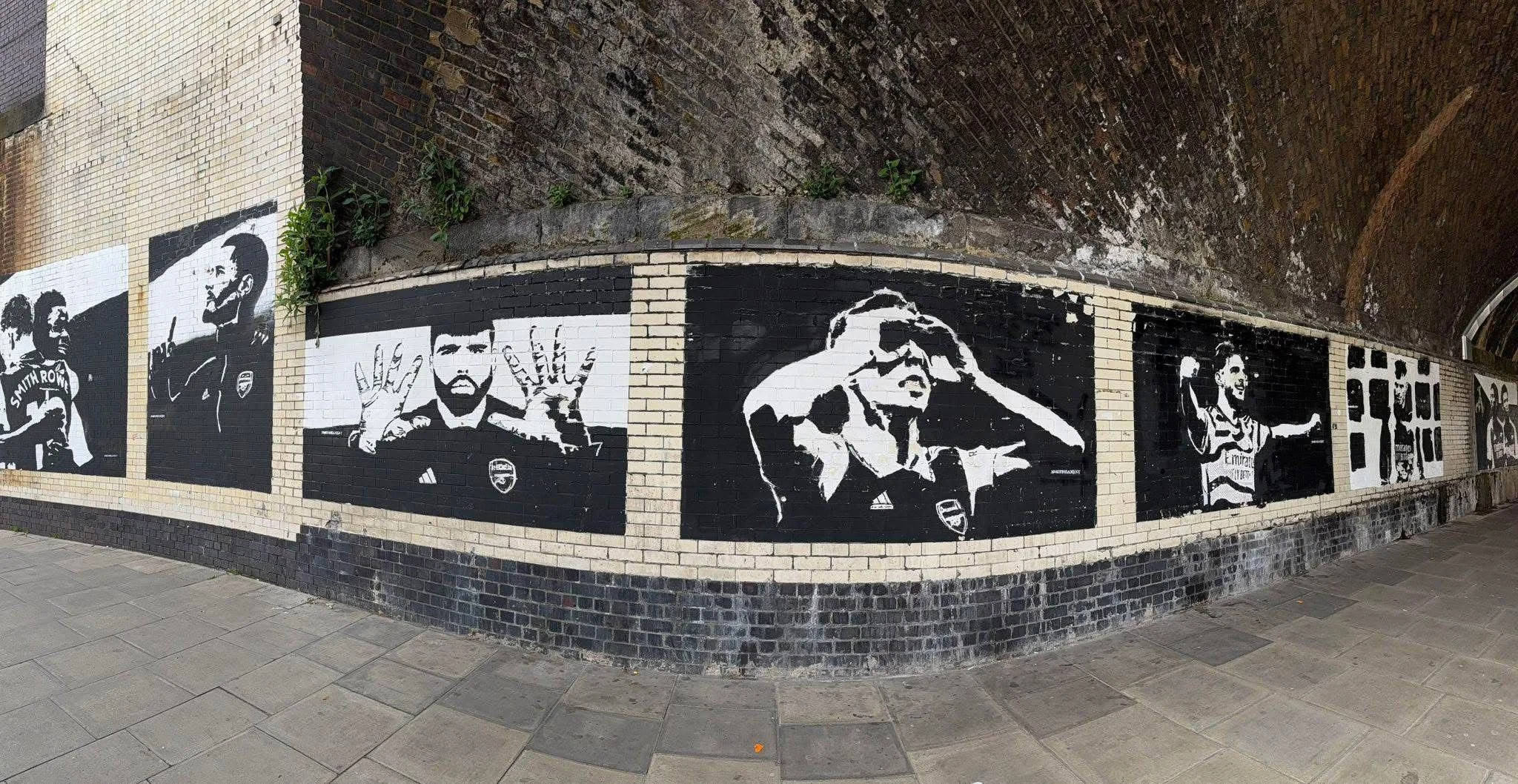
Northbanksy is the renowned Arsenal fan, visual storyteller and street artist who has turned an unloved tunnel near the Emirates Stadium into a symbol of the Club and its community.
Born and raised in North London, he came to Arsenal later than many supporters, but the club became a way of expressing something deeply personal: local identity, community, belonging and a version of football culture that stretches far beyond what happens on the pitch.
A journalist with a background in television production and camera work, what began with slogans and small stencils developed into a landmark fan-led art project that has become part of the matchday landscape for thousands of Arsenal supporters, players and visitors from around the world.
He explained how the tunnel came about.
The very first thing I ever wrote was ‘AFTV out’ at the peak of AFTV and the depths of Arsenal under Emery when everything was collapsing. I felt these people were parasitic, adding energy to the negativity as well as benefiting from it, proactively trying to encourage player abuse and fan discord.
As a journalist, I’d just done a big piece about the Berlin Wall for Channel 4 News and what had happened. I met two artists that the Imperial War Museum had hired to cover chunks of Berlin Wall. I was like, “Oh yes, street art” You know, that’s a powerful galvanising way to get an opinion out there and see what happens.
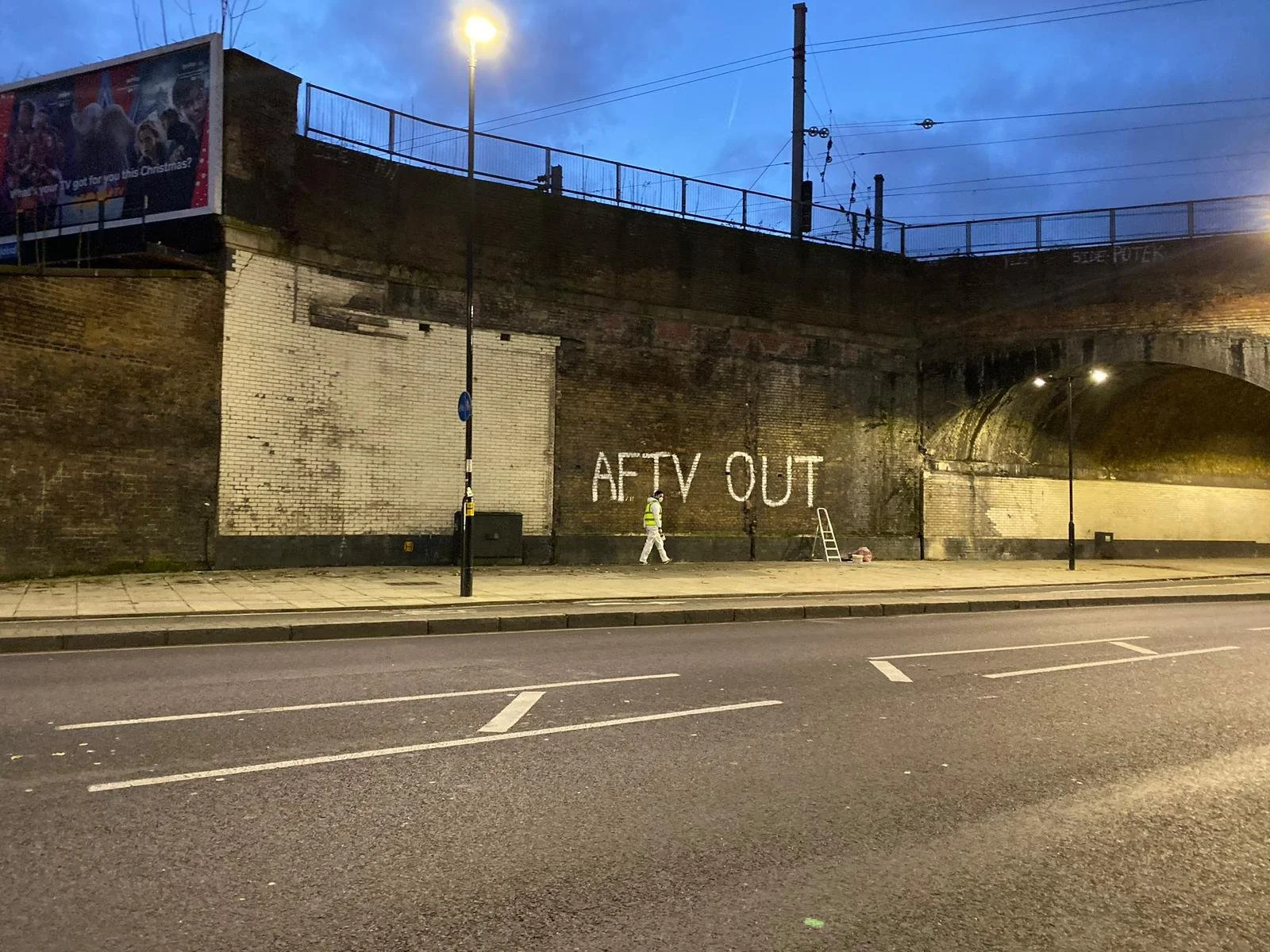
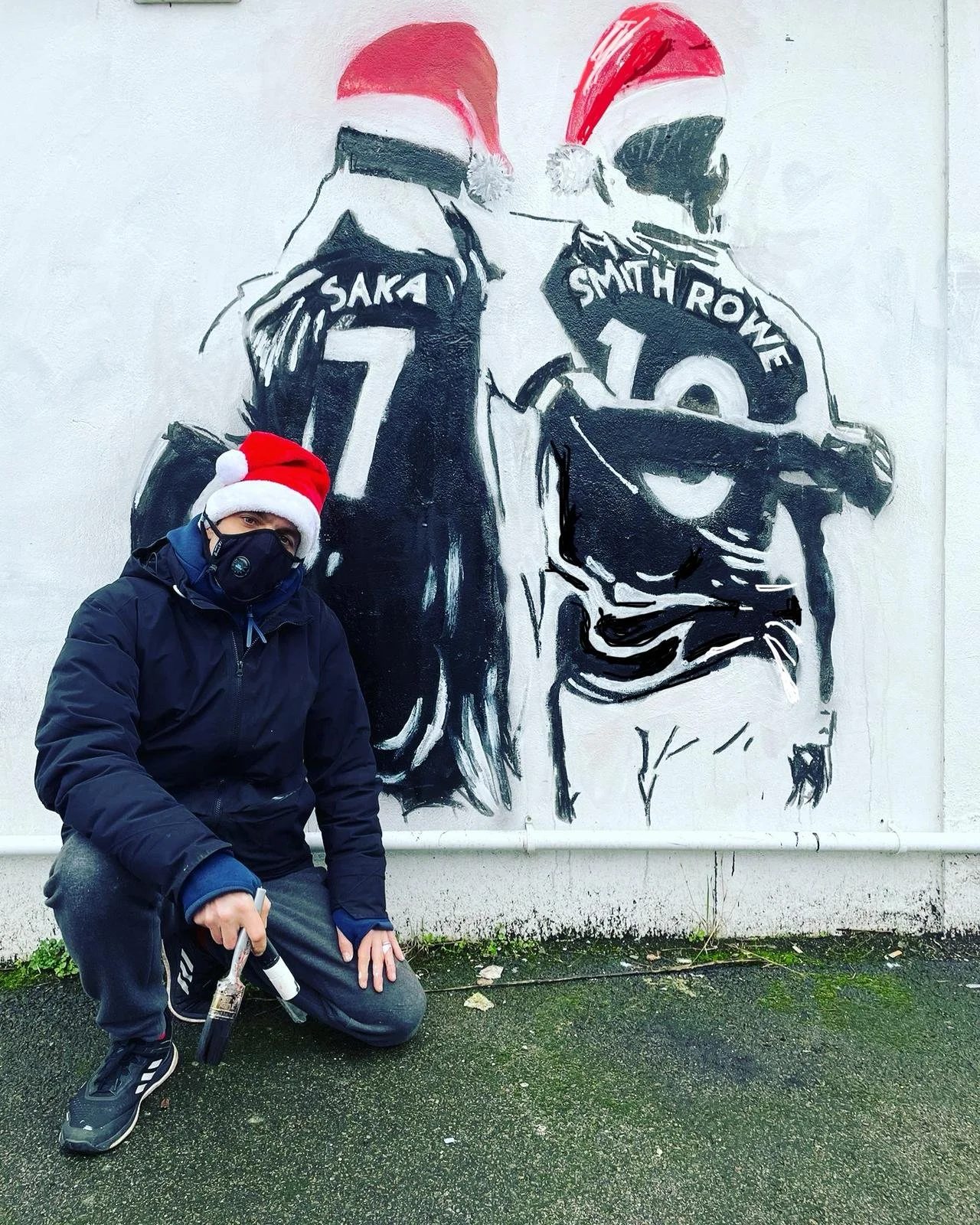
I started doing little things in the tunnel like Xhaka and they would always get scrubbed off by the council. Then, three seasons ago, the actual Banksy did a giant tree mural on Hornsey Road. There’s a stenciled character and the council put up screens to protect it. I thought that if that counts as street art, I would do an art installation and they’d have to keep it. I started with a massive image of Mikel Arteta in the first position on the tunnel and it stayed. So I pushed the boat a little further and did one of Emile Smith Rowe and Bukayo Saka. You’d have to be a brave Islington councillor who says, ‘Right, get rid of that’ a nice multi-racial image embodying youth, excellence and friendship. That stayed as well.
So then I decided to carry on going and as far as I know, they don’t disapprove of it because the cleaning crews get rid of everything else apart from my work.
Thousands of people go and see that from all over the world, but I bet most of them don’t even know I have a website because it’s not a marketing tool to just try to sell my art or make myself more relevant. I don’t know nearly as much as half of the experts, but I do know that support should really be unconditional.
I don’t cross the line. There’s never abusive stuff there. The worst I’ve done is putting Eze there just after he signed when he was expected to sign for Tottenham. It was obviously a bit of a wind up, and it clearly did wind someone up because they came the next day with white paint which became a global story. The only other one that was probably the most antagonising was Nicholas Jover, with people saying he was the most odious man in football even though he’s never given an interview!
I have given some to players – I met Declan Rice through his brother and gave him one at the London Football Awards. Myles Lewis Skelly came with his mum to my house to get a print and then I arranged to send one to Ethan Nwaneri as well because it’s the two of them.
I also got messaged by Max Dowman and sent him a framed version of his painting. He actually contacted me the night before the Everton game when he came off the bench and became the youngest scorer.
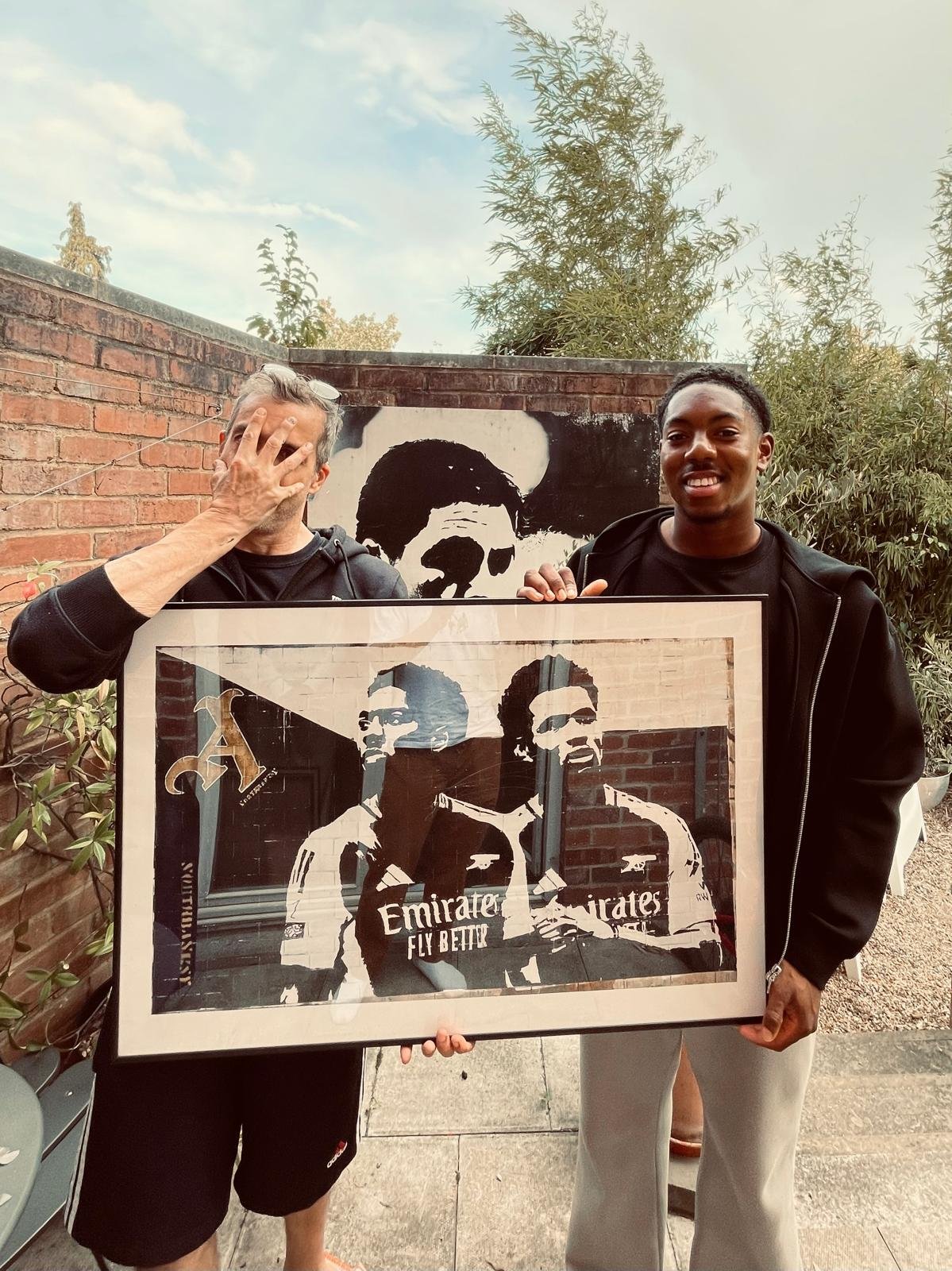
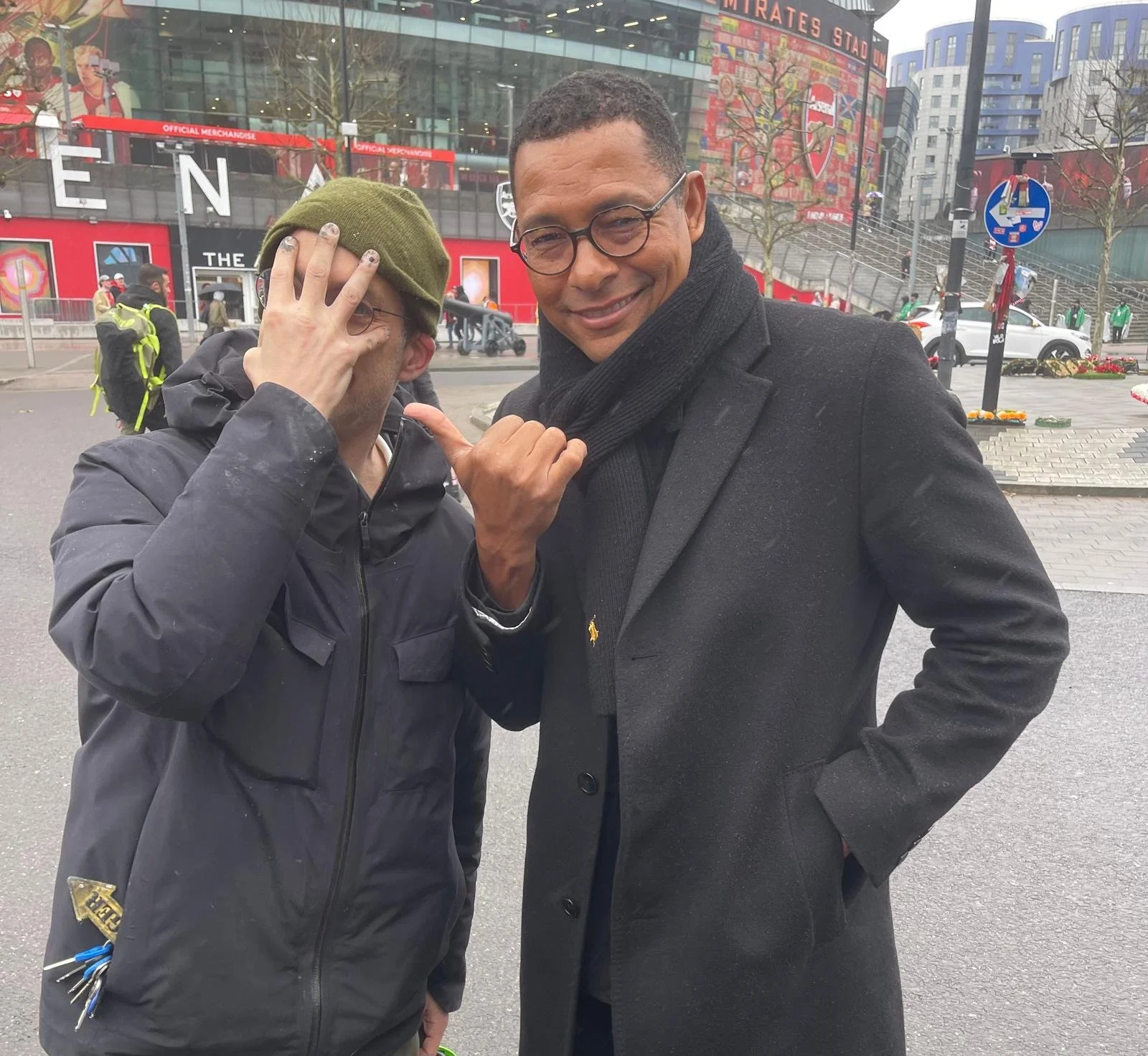
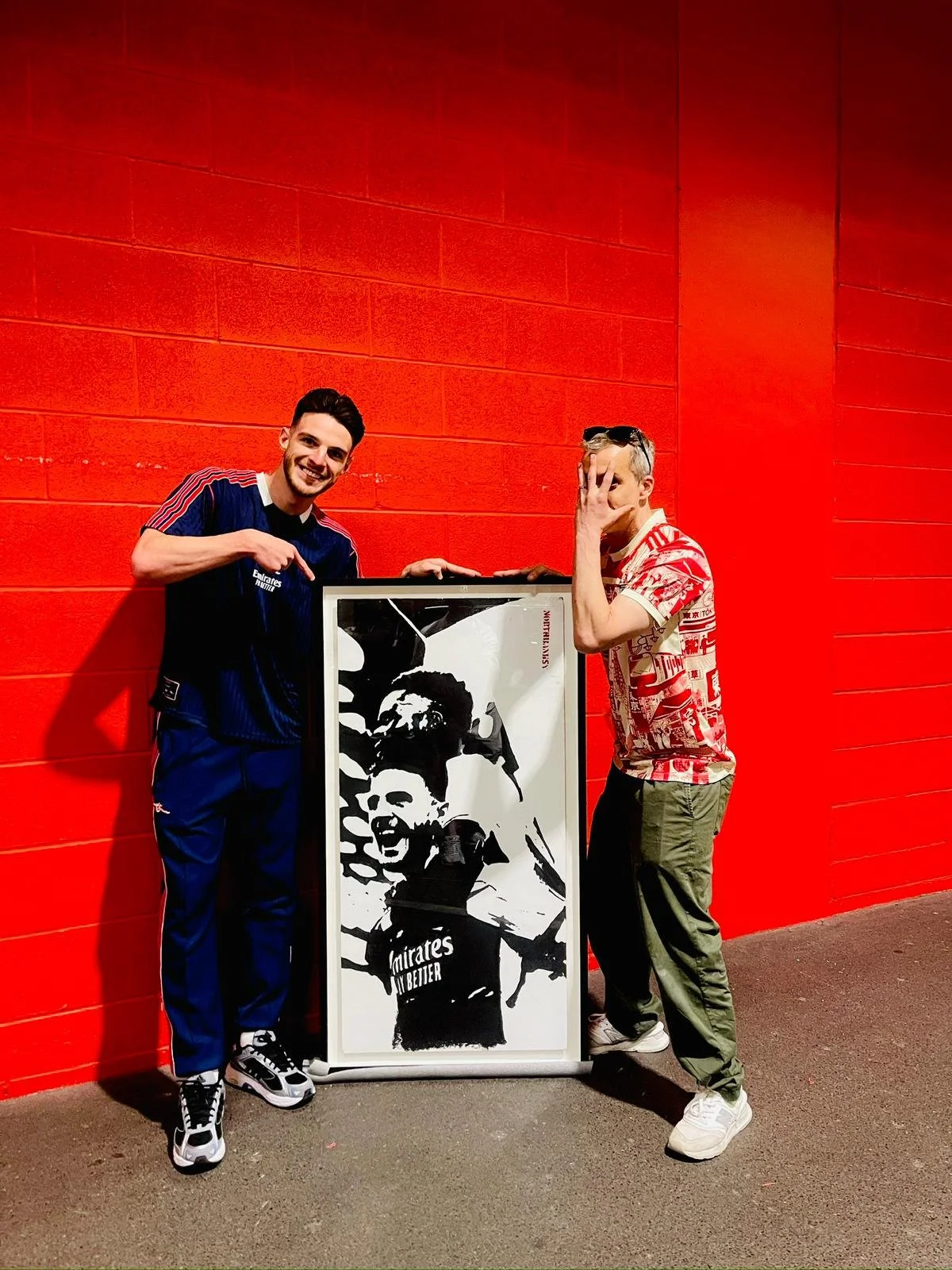
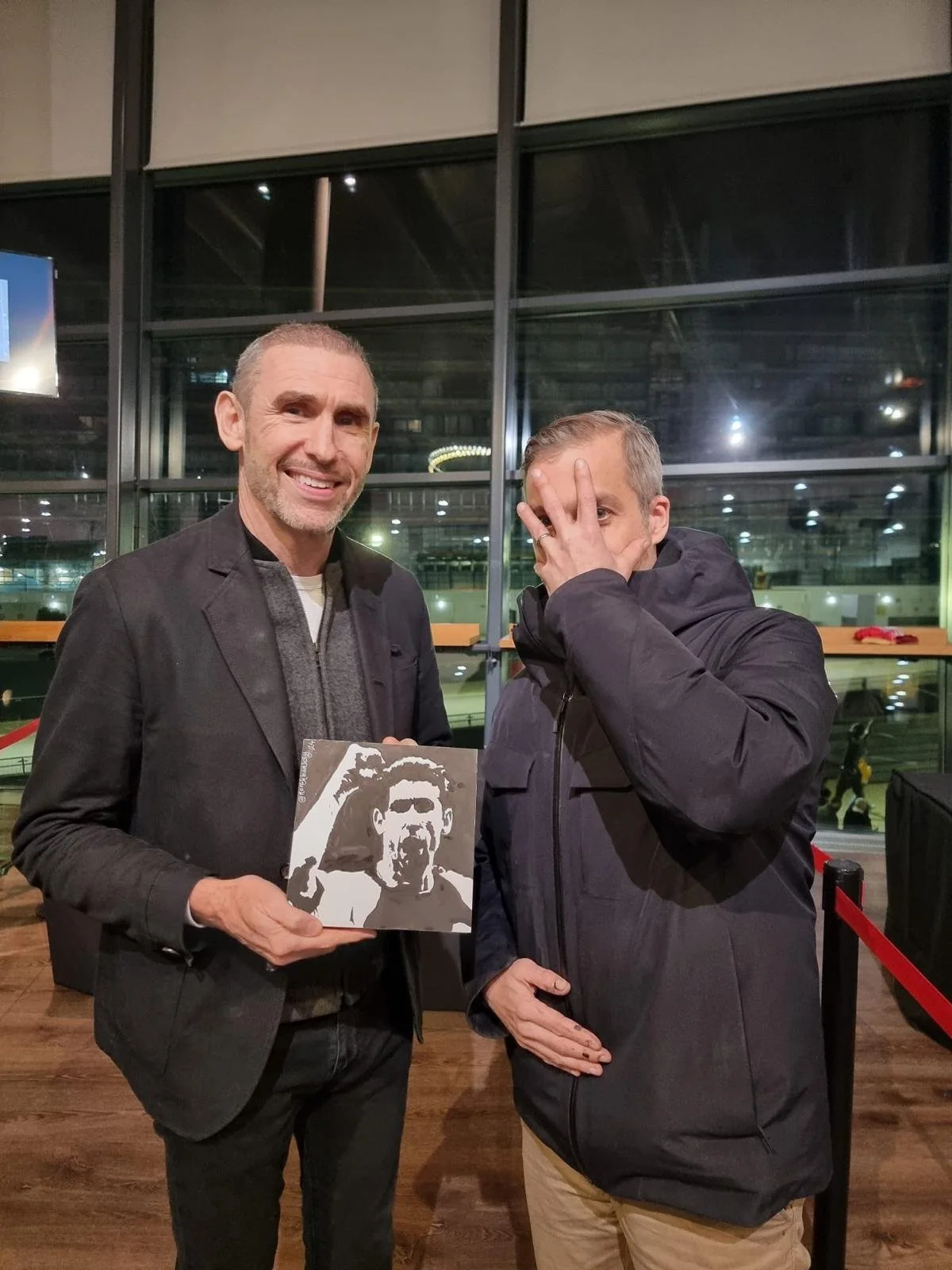
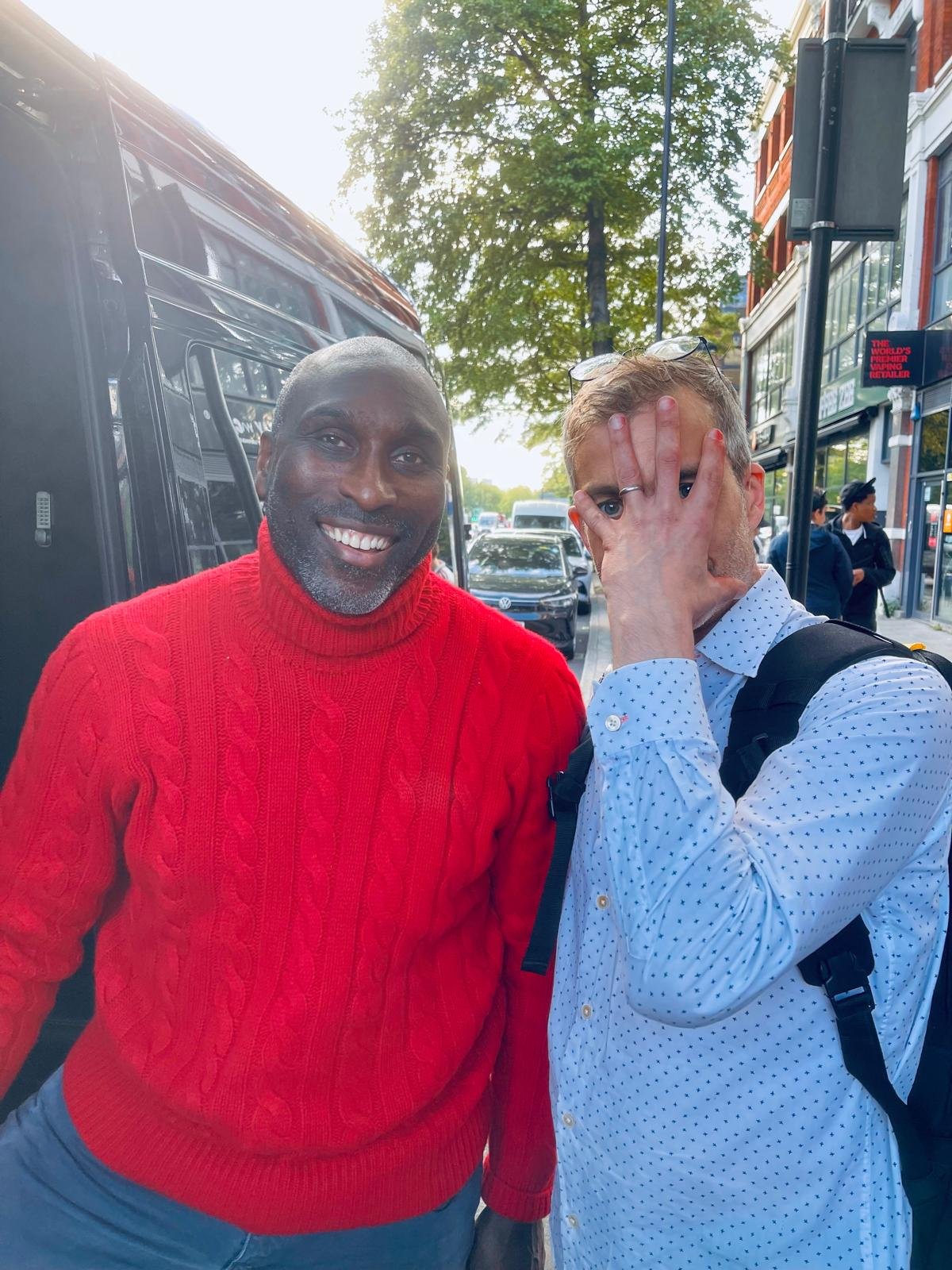
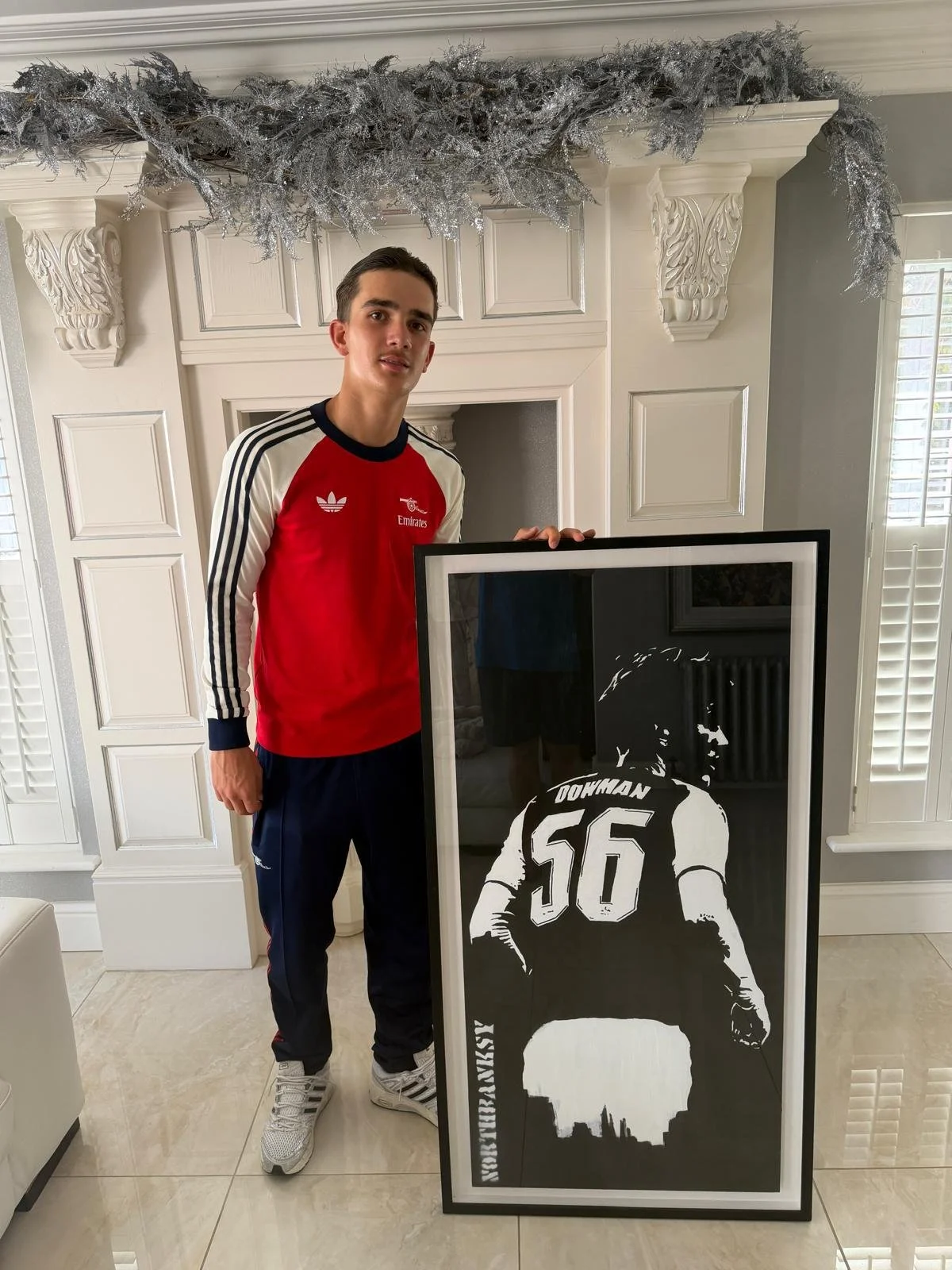
Mohamed Elneny turned up and did videos of himself at his mural.I think the thing is that it’s authentic for them, its nothing to do with branding, this is just more innocent, isn’t it?
A few other players like my posts but I don’t know if that’s really them or not.
When did you start supporting Arsenal and why?
I came to Arsenal quite late in my life. It was probably around the time I went to university, in 1990, that I really started to get into it.
In some ways, I came to Arsenal by accident, but I think I was also looking for an identity that I could feel was my own. I was born and raised in North London, but my background is Iranian, German-Jewish, Polish and Russian, which is quite conflicted in lots of ways. They are not countries or histories that necessarily sit easily together, so when England games came around, I wanted England to do well because it made people happy, but I did not feel connected to it in the same way.
What I did feel connected to was London, and especially North London. I was very proud of where I was from. When I first went to Arsenal, that all seemed to come together. It felt like a kind of nationalism, but not a violent or aggressive one. It was hyper-local. It fitted where I was from, and the people who followed the club looked and sounded like the place I knew.
Arsenal felt like something bigger than myself, but still rooted in something real and local. It reflected the complexities of London: immigrants, different backgrounds, different religions, different genders, different sexualities and different communities. That appealed to me enormously.
London has changed, and the area around Arsenal has changed too, but for me the club has kept its values and its history. It gives people something consistent to buy into. It is not just about football now. It is about belonging.
What was your first Arsenal match?
I have tried to work this out and I still cannot be completely sure. I know it was against Southampton, probably in the early 1990s, and I know Arsenal scored twice. It could have been 1990 or 1991. It might have been a draw, or it might have been a 2-0 win.
The official version would be that I walked into Highbury, saw the multiplicity of faces and the complexity of London reflected back at me in the crowd, and thought: I have found my home.
What really struck me was the way the crowd behaved as a collective. I have always been interested in crowd culture and fan culture, perhaps even more than the technical side of football. I am interested in people, culture and mass movements.
There was a moment in that Southampton game when a libellous chant about the private life of a Southampton player spread around the stadium almost instantly. The content of it was not something you would say now, and rightly so, but what fascinated me was not the words themselves. It was the way something spontaneous and absurd could move through a crowd like a flash fire. One person starts something, then suddenly thousands of people pick it up.
I hadn’t really seen that kind of energy in real life before. It showed me how a football crowd rises and falls, how it reacts to tackles, counter-attacks, encouragement, frustration or humour. There was something chaotic and uncontrolled about it, but also something incredibly powerful.
That combination of a hyper-local North London identity and the unpredictable energy of the football crowd really appealed to me. I found it moving, and even hopeful in a way.
I later had a season ticket at Highbury from 2002, and I had gone to most games for three seasons before that. Highbury itself was extraordinary. You could be right on top of it before you even realised there was a football stadium there. I remember the North Bank, the marble halls, the art deco frontage, and also the very ordinary football-ground details, like someone selling handmade bagels wrapped in cling film.
That contrast was part of its charm. Highbury was just for football. There was not much else to do there. But at the same time, Arsenal had this sense of history and tone, almost set by the architecture itself.
Who was your first Arsenal hero and why?
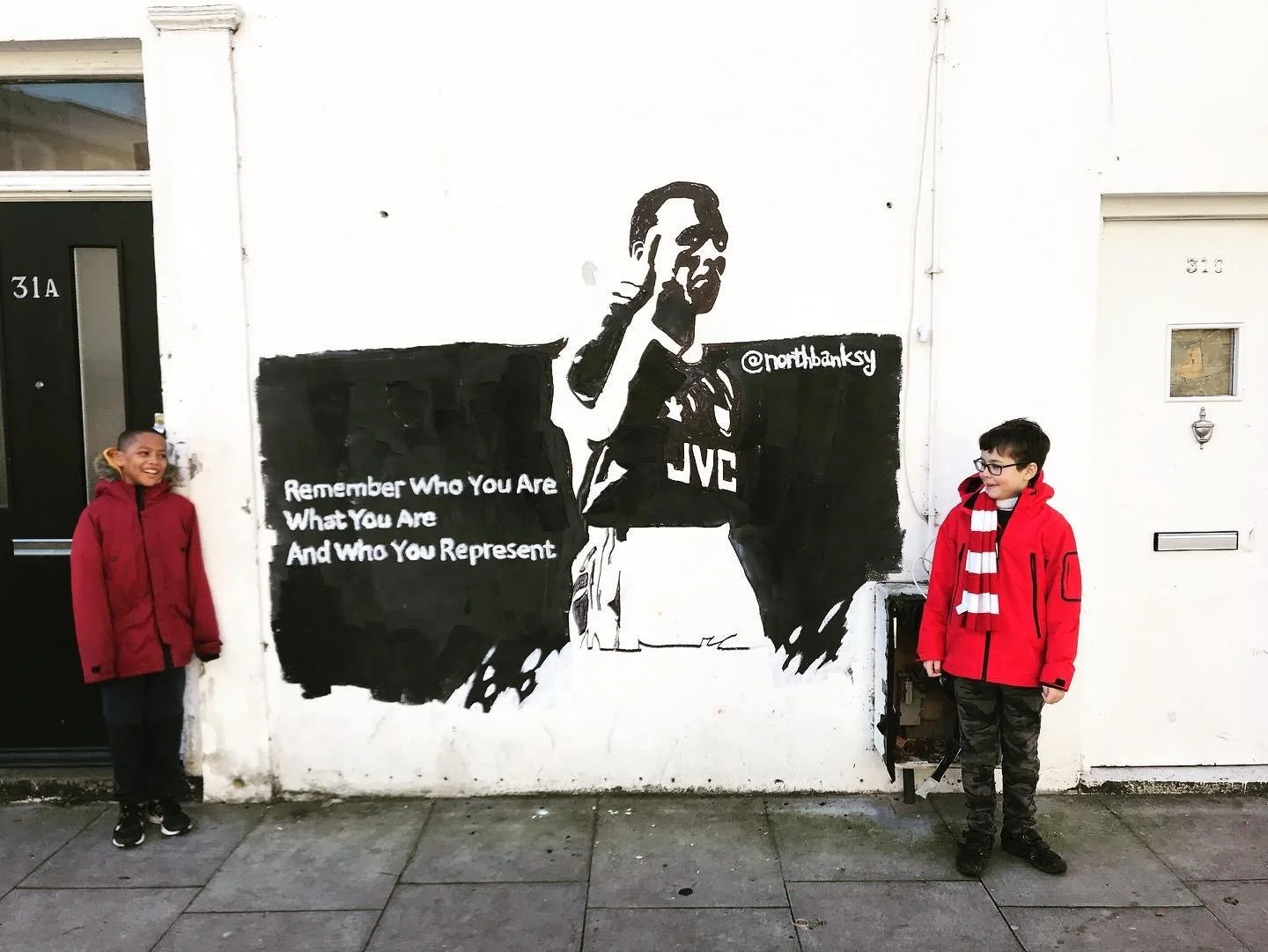
The first player I really loved was Ian Wright. He was prolific, he did not seem to give a damn, and he was cool. He had that energy and personality that made him impossible not to like.
But when I look back properly, my first real Arsenal hero was probably Arsène Wenger.
Once I understood more about what he did for the club, I realised that what Arsenal got from him was not guaranteed. It was not a natural progression. Arsenal could have gone badly wrong at that point. George Graham had arguably overachieved, but it did not end well, and then Wenger came in when nobody really knew who he was.
He was mocked and abused at the start, but he turned the club around. He took Arsenal to the highest level I had seen. He refined the football and refined so much around the football. People mocked him, but he changed how everybody in this country looked at the game, and possibly had an impact beyond that as well.
He brought in some of the best players I have ever seen. He brought success, but he also helped make Arsenal more of a culture club. It was no longer only about hard-fought battles and old ideas of English football. There was sophistication, imagination and a willingness to try new things. He brought players from places many supporters had barely thought about before, and it all came together in some brilliant times.
He also had to deal with the move to the Emirates, and Arsenal suffered a lot after that. I do think he probably stayed too long, and I think he might agree with that now, but he took Arsenal into the modern era. He set the club up for an era of huge businesses, huge sums of money and internationalisation.
And, of course, he signed Mikel Arteta, which looks very significant now.
Who is your favourite ever Arsenal player and why?
That is one of the questions I really had to think about. It could have been Patrick Vieira. It could have been Santi Cazorla. They were both midfielders, but very different kinds of player.
But the player who moved me the most, and the one who feels most relevant to what I do, is Granit Xhaka.
Xhaka is symbolic of how Arsenal nearly disappeared as a serious club and then turned things around through belief and patience. He also symbolises how the maddening crowd on the internet is not always right, and how someone with strong spirit can overcome being turned into an easy whipping boy for a complicated problem.
I was very hopeful when he signed. My wife is from Kosovo, so there was also a slight emotional connection there. We wanted him to do well. He seemed to be doing well, and then it went badly wrong.
Arsenal were in a bad place. He was made captain by a player vote, played out of position, out of form, and left to carry the can for far too much. The Crystal Palace game, when he was booed off, was disgraceful from Arsenal fans. People talk about his reaction, but I was there, and the reality was that people were cheering when his number went up. Arsenal were chasing a draw against Crystal Palace, and supporters booed their own captain off the pitch.
For me, that was an indictment of how the line between internet idiocy and match-going fans had started to break down. Xhaka was a huge target for AFTV and others, but he was not the cause of that team being bad. In the end, he was the only member of that team who survived when Arsenal got a new manager and a new order.
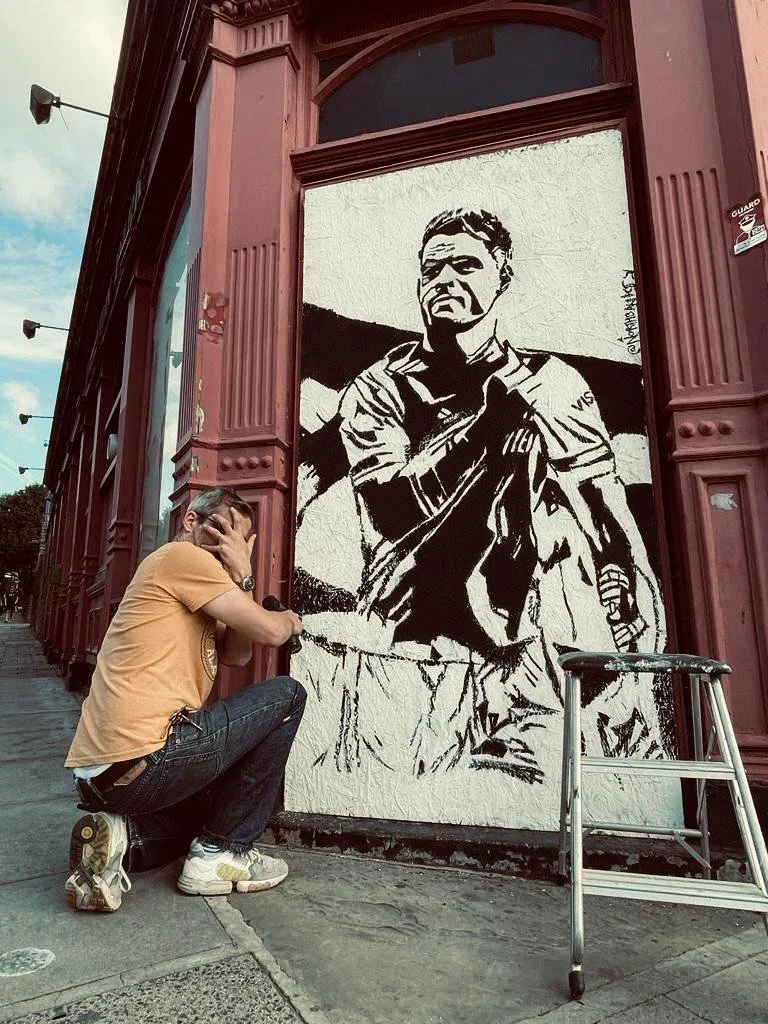
Before the tunnel really became what it is now, I used to do small stencils of Xhaka because I thought he might see them as he drove in and out of work. It was my way of saying: don’t worry, someone out there is sticking with you.
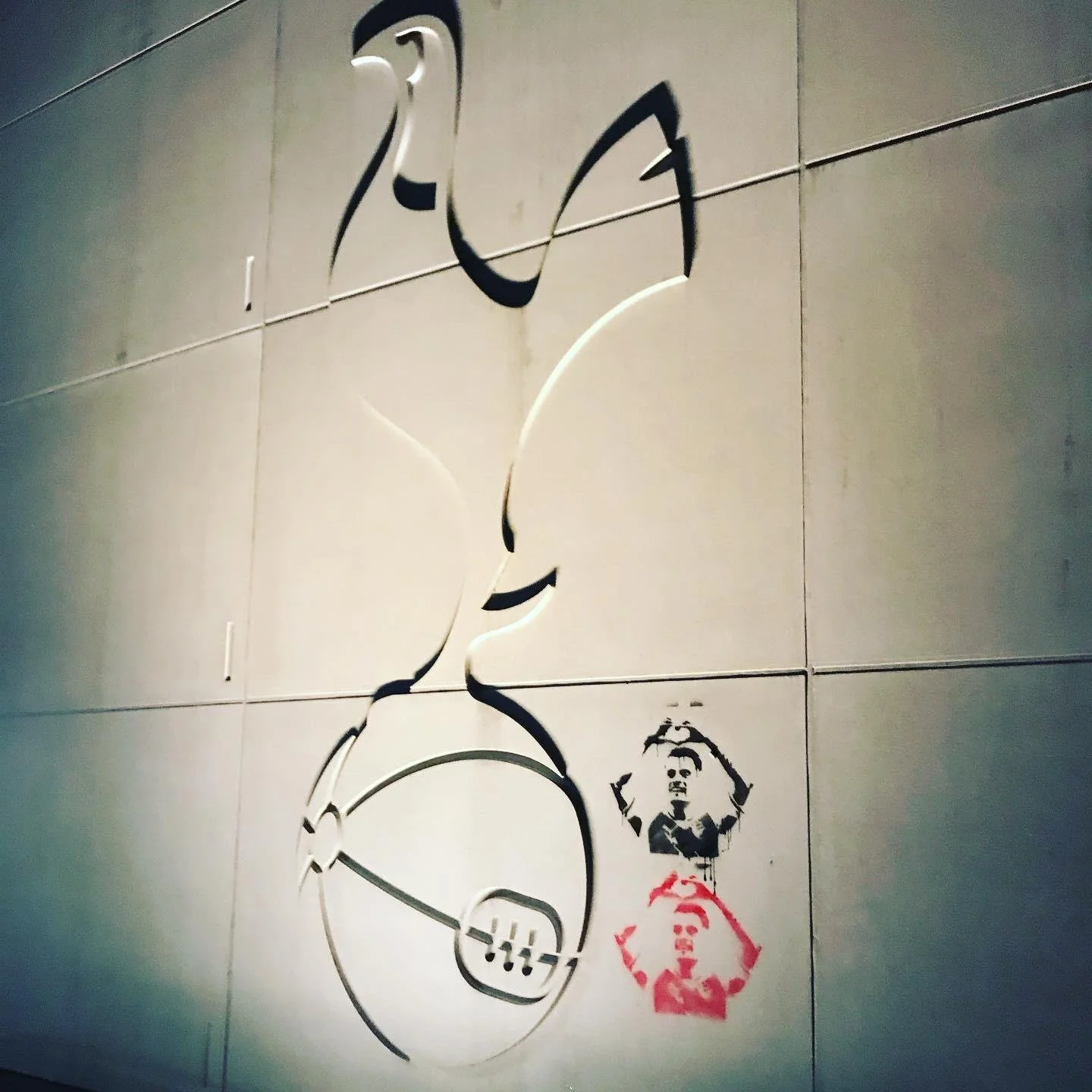
I also put a couple of Xhaka stencils on Tottenham’s stadium, which caused a big fuss. Tottenham were really just a prop for a message back to Arsenal fans, but it became part of the Northbanksy story.
That is why Xhaka means something different to me. It is not only about what he did with the ball. It is about resilience, loyalty, patience and the way supporters treat their own players. It’s about redemption.
What’s your biggest Arsenal regret or disappointment and why?
Paris in 2006, without a doubt.
Coming back from that Champions League final felt like coming back from Dunkirk, except without the Stukas dive-bombing you. It was like a completely shattered, demoralised, broken army. It was horrible.
It also felt like the end of something. Thierry Henry stayed for a bit longer, but he was never really the same player after that. When he looked up and missed that chance, it felt like everyone thought he was looking at them personally. To me, he just looked spent.
Everything about that night seemed to carry regret. We were winning. Then everything that happened, happened. You can look back at that game and find so many moments: there are so many strands to it.
But more than anything, it felt like the closing of an era. It was a horrible result, but it was also the feeling that a great Arsenal side had reached the end of the road.
What is your favourite ever Arsenal match?
I find it hard to choose one match because I don’t always remember games in the same way other people do. I often remember the result, the atmosphere and the chaos of the experience more than the tactical detail.
One that stands out is the 5-1 win away to Inter Milan at San Siro in 2003. It was one of my first European away games, and it was Inter Milan, so you naturally thought Arsenal might get destroyed. Instead, we won massively.
San Siro was an extraordinary place to go for one of my first away games in Europe, even though I didn’t particularly like Milan as a city. I had this idea it would be aesthetically pleasing because of the opera, fashion and everything else associated with it, but it felt far more industrial than I expected.
The football itself was incredible, but what I remember most is the scale and the disorder of it all. In Italy, away supporters are treated like a potential civil disorder incident. It takes time to get into the stadium, time to get out, and the whole experience feels different from an away game in England.
I remember the result, the chaos, being high up in the stadium, things being thrown, and the sense that Inter had not expected to go behind. Once they did, they left themselves exposed. In terms of Wengerball, that night was probably one of the pinnacles.
What is your favourite Arsenal memory away from the pitch and why?
My favourite memory is May 19, when everyone just turned up at the stadium without any real planning. It was not an organised parade, an official trophy lift or anything controlled by the club. People just came.
It felt like vindication, release and a huge bonding moment with everyone else who had been through the same thing. It felt like being set free. People I had stood beside for years were just incredibly happy.
What made it special was that it was for us. There were no corporations, brands, money or media companies involved in it. We all just turned up and suddenly there were thousands of us. That kind of spontaneous gathering is powerful because it belongs to supporters.
In a funny way, it reminded me of the hopeful part of the Kroenke Out protest after the Super League. Thousands of people turned up then too, and I remember thinking: people really care about this. They did not want Arsenal in the Super League and did not want the club being run against its own interests.
May 19 felt like the other side of that. It was joy rather than protest, but it came from the same place: the supporters showing that Arsenal matters deeply to them. Of course, the owners can do what they want because they are multi-billionaires, but they did take supporters seriously.
That is why those moments mean so much to me. They show Arsenal as more than a football club, more than a business and more than a brand. They show it as a living community.
To buy prints by Northbanksy, click HERE and his Instagram is HERE