
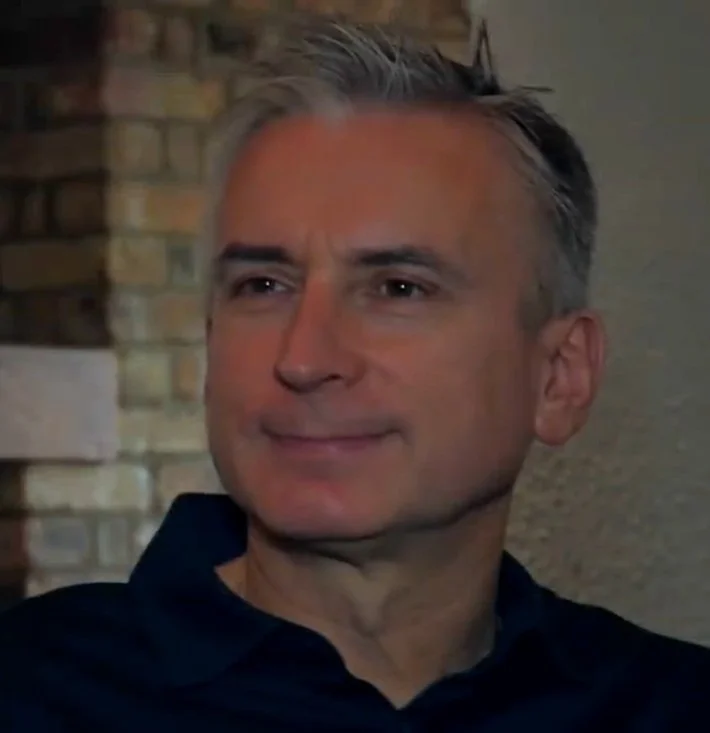
When Alan Smith joined Arsenal in the spring of 1987, not a lot of Gunners fans knew a great deal about him.
In the days when most clubs played with two forwards, he had forged a reputation at Leicester City as a foil for Gary Lineker, who went on to star at Everton and Barcelona. The fact that Arsenal loaned him back to the Foxes as soon as he’d signed meant that his eventual arrival the following summer was to no particular fanfare.
But Alan was to become one of Arsenal’s greatest ever strikers, scoring 115 goals in all competitions, and contributing to two of the greatest nights in the club’s history.
For those of you too young to recall, Alan scored the first and assisted the second in our 2-0 victory against Liverpool at Anfield in May 1989, a result that secured Arsenal the league title for the first time in 18 years in what is undoubtedly the greatest ending to an English top flight season.
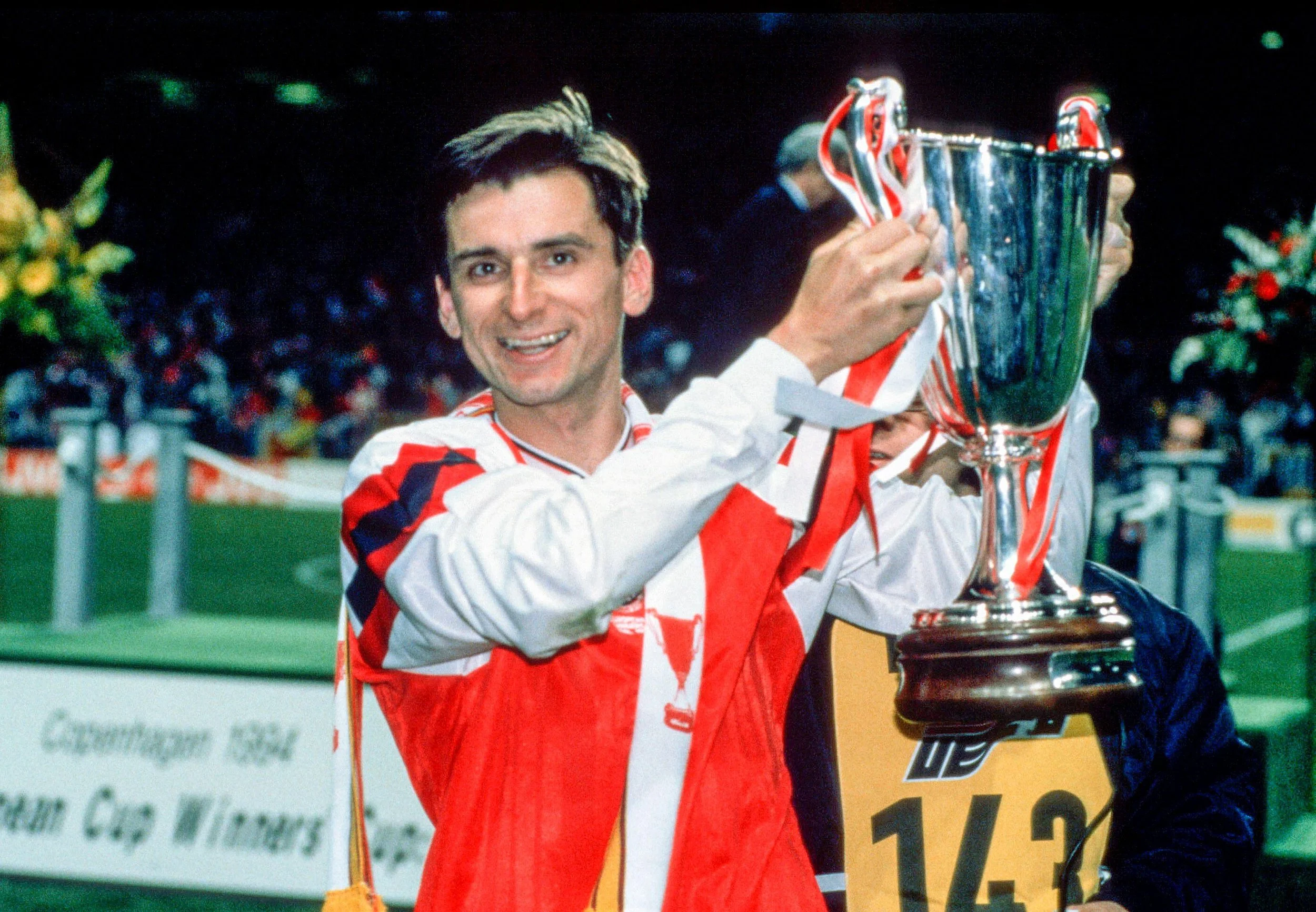
Five years later at the Parken Stadium in Copernhagen, Alan scored a sensational half volley which secured Arsenal the European Cup Winners’ Cup against Parma, then one of the giants of Italian football.
He ended up winning the Golden Boot twice, winning six trophies and earning deserved recognition with England as well.
Now a commentator for Sky Sports and others as well as working for EA Sports for almost a decade, Alan’s contribution to Arsenal’s history is worthy of legendary status. It was an honour to speak to him about his eight year spell in North London.
What do you remember about signing for Arsenal and what it meant to wear the red shirt?
There was just something about Arsenal. I had spoken to Chelsea and I had spoken to Alex Ferguson, so I could have gone to Manchester United. But I had seen George Graham on television and he looked the part and spoke the part.
You could also see the players coming through from the youth team – Tony Adams, Rocky Rocastle, Mickey Thomas and Niall Quinn. It seemed that something was happening at Arsenal and it appealed to me. There is so much luck in football and in life, but I chose the right club in the end.
When you first put the shirt on, you do not really have time to think about the overall picture of representing Arsenal. You are concentrating on your job. You want to do well, get your first touches right and show the new supporters that you are not a bad player.
There are a lot of eyes on you because you have been bought for a lot of money, as it was then, and the new centre-forward has come to town.
What do you remember of your first game?
My first Arsenal game was Liverpool at home on the opening day of the 1987-88 season. It was a hot day and I remember supporters sitting on top of the North Bank stand, which would never be allowed now. The ground was packed.
You soon became aware of the difference between playing for Leicester and Arsenal – the scrutiny in the media and the scale of the occasion. It was a full house and they squeezed everybody in, whereas Filbert Street was a slightly smaller ground than Highbury. It gave me an early taste of what was expected.
I didn’t really get nervous. I always had butterflies, although nothing too bad. I was jealous of players who said they never got nervous. On the day of a game, you wake up and feel different because it is match day. Once you go through the warm-up, the match kicks off and you start playing okay, you forget about it.
Liverpool had just signed John Barnes, John Aldridge and Peter Beardsley, so they were a very good team and it was a tough opening game. It was a big game for me and you want to start well, but we were beaten 2-1.
I assisted Paul Davis for our goal, but I also assisted Steve Nicol for their winner. They had a free-kick on the left, I headed it back and it went straight to Nicol near the corner of the box. He headed it from a long way out and it flew over John Lukic into the far corner.
It was disappointing, although the gaffer said: "I thought you did well, Alan." That was nice because I thought I had played okay.
What was it like working for George Graham and how different was it to your time with Leicester?
It was not massively different. My manager at Leicester was Gordon Milne, who was a great man. He had come through at Liverpool under Bill Shankly, had been promoted and won the league there. He was a football man. Training was short and sharp and he was fairly strict.
George had a reputation, but the thing he always said was that once he had seen your best performance, he wanted you to get as close to it as possible every time afterwards. You would not always reach your best, but if you could produce an eight out of 10 consistently, that was what he demanded. It was about professionalism and applying yourself.
Most of the time we were a successful side, so you didn’t often see the other side of him. He didn’t have to become irate too many times, although it was always under the surface if it needed to come out.
The playing style was not wholly different. We played with two up front and, at the start, I played with Paul Merson. I loved playing with Merse. George had been a striker and was known for his heading, so he would do some coaching about using the neck muscles. He would walk along like a chicken demonstrating it and we would all laugh behind his back, but he could give you useful tips.
My role remained fairly similar – holding the ball up, bringing other people into the game and getting into the box. I had played with Gary Lineker at Leicester and Merse was a different type of player, but my own game did not change greatly.
George always kept you at arm's length. There was a distance and you knew who was boss, which I think is right for a manager. When he came around the corner at London Colney to take training, everybody was on their toes because the gaffer was coming.
He rarely missed a day. It would have to be something extraordinary, such as a funeral, for him not to be there. He loved the training ground and was always pushing us.
I would not say I was grateful to him for signing me because it was a two-way street. He could be grateful that I performed. A club signs you under a contract and you want to do your job. I could have fallen flat and he could have been criticised for signing me.
What are your memories of Highbury?
I remember the day I signed. George and the team were away in Portugal, so Steve Burtenshaw, the chief scout, gave me a tour of the ground. We went into the dressing rooms, up to the wood-panelled boardroom and then out onto the pitch, where we stood in the centre circle.
I will never forget him saying: "Alan, we have signed many centre-forwards here, but not too many have succeeded." I immediately thought: "Oh God, how is this going to turn out?"
As soon as you walked in, with the commissionaire on the steps at the entrance on Avenell Road, it felt different from any other club. It reeked of history and you could feel it.
It is easy to forget that during the first season or two there were times when the ground might have been only half full or two-thirds full and the supporters would get on your back a little. That was when it could be hard to play for Arsenal, as it can be at a lot of clubs.
But I loved the ground. There was something special about it and a lot of opposition players loved coming to Highbury as well. Peter Beardsley spoke about the heated floors in the dressing room and all the rest of it. It was simply different.
Success helped to create the rapport with the supporters. We would go out to warm up about 20 minutes before a match and the ground would already be full. The North Bank would be packed and, while you were having a few shots at goal, you would be waiting for them to sing your song so you could give them a clap.
There were great moments scoring in front of the North Bank because you were so close to the supporters. It was lovely to feel appreciated and it was special when they sang your name. We felt close to the fans.
We had a player-of-the-year event on Tottenham Court Road every year, where you would chat to supporters and get to know some of their names. On match days, you would park your car, walk through the crowd, see supporters and sign autographs. It is different now, but it was great.
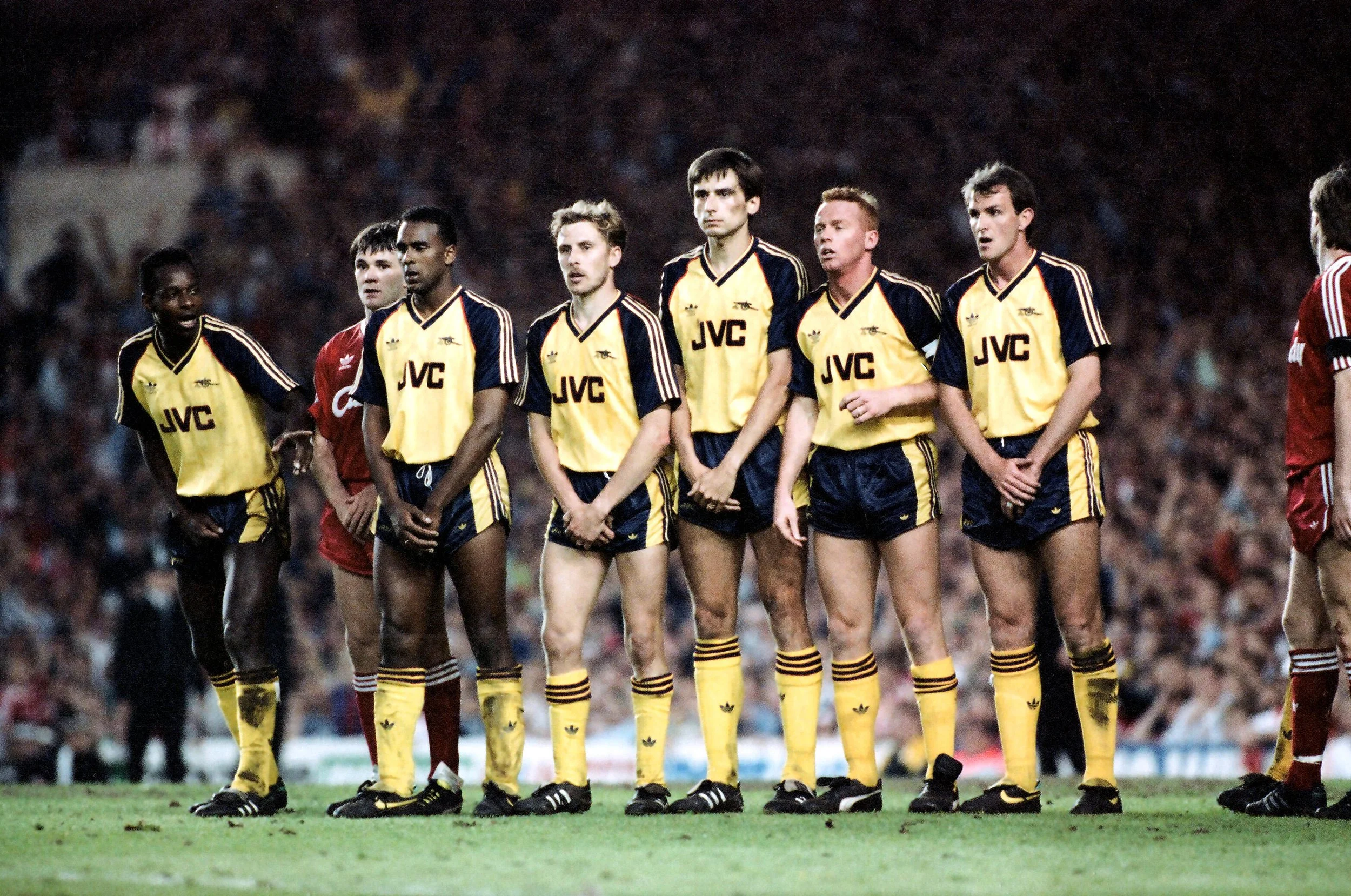
Alan (centre) scored the first goal and assisted the second as Arsenal won the title for the first time in 18 years
What was your favourite ever game and why?
It has to be Anfield in 1989. Nothing is ever going to touch it. People mention the European Cup Winners' Cup final in 1994, but Anfield was special. Arsenal had not won the league for 18 years and, with the circumstances and the goal in the final seconds, you could not write a better script.
It has gone down in Arsenal folklore and there will never be a more dramatic ending to a league season in English football history. It would never be allowed now for two teams to play after all the other sides had completed their fixtures, with a straight shootout for the title.
To have been part of that match, to have scored and provided an assist – although we did not talk about assists at the time – means nothing will ever beat it.
Before the game, there was a feeling in our camp of: what have we got to lose? Nobody fancied us and all the papers were writing us off. We pinned up one headline at London Colney before we left – I think it was 'Men against boys', which may have been a Graeme Souness quote. We travelled up feeling relaxed, laughing and joking on the bus, and thought we would just have a go.
It was hard enough to win a throw-in at Anfield, never mind score a goal, because Liverpool could keep the ball for fun. George played a big part that night because he emphasised the need to keep a clean sheet.
It wasn’t about throwing men forward immediately because we needed two goals. He said we would keep a clean sheet, get the first, get the second and perhaps get a third.
The first half was awful. Very little happened. It was played at 100 miles an hour, tackles were flying in and nobody made a fuss as they did not in those days. You got up, dusted yourself down and the referee told everybody to play on. We had few chances, although Steve Bould had a header cleared off the line.
We came in at half-time feeling downcast, but George was really pleased. He said it had gone exactly as he wanted – we had kept a clean sheet and now we would push on, getting Lee Dixon and Nigel Winterburn further forward. We changed from a back five to a back four and then I scored.
Once we got the first goal, we started thinking it might be on. You could feel the nerves among the supporters and that the Liverpool players were not quite themselves. They had been through a great deal of emotion and funerals after Hillsborough (When 97 Liverpool fans lost their lives), which has to be acknowledged. We didn’t create many chances, but we stayed in it until the very end.
We didn’t know how much time was left because there was no clock in the stadium. We relied on hand signals from the bench. When John Lukic threw the ball to Lee Dixon, Lee was not expecting it because I thought Luki would launch it. We did a lot of shadow play in training, so when Lee received the ball, I knew where to show for it in the channel.
He played a lovely pass and I thought I had to take a chance with my touch because the whistle could go at any second. I turned in one movement, my touch served me well and I saw a yellow blur in my peripheral vision – Mickey Thomas making his run. I just tried to help the ball into his path.
It did feel like slow motion when Mickey had the ball and the red shirts were converging on him. Mickey was the most laid-back man in the world and would never do anything before he wanted to do it.
We thought he might leave it too late and be tackled, but we couldn’t support him because we were 10 or 15 yards behind. He left it until the final second.
You cannot quite believe it when it happens. We went to Mickey briefly while he was doing his little neck celebration and then went towards the supporters, but the referee told us to get back into our own half because there was still time left. Liverpool had one more attack. Mickey pulled the ball out of the sky and knocked it back to Luki, who did kick it long that time.
I thought that if I could stop Alan Hansen heading it back into our half and get the slightest glance on the ball, we had won the league. I managed to get that glance, Perry Groves chased the ball towards the corner flag and then the whistle went.
You are in shock at that point. Everybody on the pitch – Liverpool stewards, police and others – was saying: "Well done." The Kop stayed behind and gave us a round of applause when we went around the ground, which we appreciated. It was an amazing night.
Afterwards, we were sitting in the dressing room completely shattered, drinking champagne from little paper cups. Somebody said: "Lads, we might as well pack up now because nothing is ever going to get better than this."
Nothing would ever surpass it. Even the players who went on to play for Arsène Wenger and won the Double in 1998 – Lee Dixon, Nigel Winterburn and Tony Adams – still regard Anfield 1989 as the day.
The coach journey home went in a flash. Cars were overtaking us with people hanging out of sunroofs, waving and slowing down, and we were waving back. We then went to a snooker club in Southgate. It was not exactly rock and roll, but ITV knew we were there because their cameras were waiting. I even gave my tie away to somebody that night.
What was your biggest disappointment at Arsenal?
The biggest disappointment was the day I was told I had to retire. I tore my cartilage at Millwall in the FA Cup third round in January. You initially think you will be out for a few weeks, but when they operated, they found bone damage and tried to stimulate growth.
When I was attempting to return, I remember running down the track at Highbury and feeling that my knee was not right. There was fluid on it. I had another operation to try to resolve it, but it didn’t work.
That summer, the team were going to China and Hong Kong and I was not on the list because there were matches and I couldn’t play. I asked to go because I thought it would be my last trip. I already knew I would have to retire, even though (physio) Gary Lewin was trying to encourage me.
After the trip, I saw the surgeon at the London Independent. I will never forget him showing me the scan and saying: "There is no choice, Alan. You are going to have to finish." I was 32. It was not young, although it was not old either, and it was a huge blow. I also had not played well in my final years, which was very disappointing for me.
I do not feel robbed. I once read that the average career of a footballer is seven years because so many players suffer a serious injury at 18 or 19. I cannot complain because I had 13 years in the game and won what I won at Arsenal. So many players would give their right arm for that.
What made it harder was that Tony Adams, Steve Bould, Lee Dixon, Nigel Winterburn and Paul Merson all carried on for many more years. They went on until close to 40.
I will never forget watching the first game of the following season, probably on Match of the Day. I saw all the lads, suntanned after pre-season, jogging out of the tunnel. They were my teammates and I was sitting at home. That was when it really hit me – it was a new season and I was not there.
I never seriously considered coaching because I knew it did not float my boat. You are either taken by it and enthused by it or you are not, and I was not. I could follow George's tactical instructions, understand them and put them into practice, but I was never someone who became excited by coaching.
I had always fancied doing some writing when I finished. It seemed a good niche because very few former footballers wrote their own pieces rather than having ghost-written columns. I started writing for the Ham & High on Fridays and did some pieces for the Evening Standard, where Michael Hart encouraged me.
I then began writing for The Daily Telegraph and loved it. It was a different skill and gave me something new to apply my mind to, while mixing with different people.
Television followed alongside the writing. I never imagined my personality was suited to a media career because I had always stayed in the background, kept my head down and got on with things. I never courted publicity or did many newspaper interviews as a player. The Sky work gradually built alongside the writing. The writing was an ambition, but the rest simply happened.
You now see Arsenal shirts in places such as America and get a sense that the club has expanded globally. People recognise me in all sorts of places. I also worked on the FIFA video game with Martin Tyler for nine years, and some people recognise my voice from that as much as they remember my playing career. They tell me I was part of their childhood because they played the game for hours.
What do you consider to be your legacy and the impact you made as an Arsenal legend?
I am proud to have played a part in Arsenal's history. How other people regard me is up to them. My personality has always been to keep my head down, but what I achieved is there in black and white. I think people appreciate me and recognise what I did.
I feel privileged to have played a big part in Arsenal's fortunes. It is always with you. Perhaps people don’t recognise me as much as some other players, but that is life. Nobody can take away what I achieved and I am proud to be associated with the club.
People always said that once you have played for Arsenal, the club is in your heart and it never leaves you. I think that is true.
Looking back, I feel very honoured to have represented Arsenal. The further away you get from those achievements, the more special they feel because they go into club folklore. It was a great period and a lot of supporters tell me it was their favourite period. There was a connection between the supporters and the players, as there is now as well.
I feel honoured and privileged to have pulled on the red and white shirt. At the time, you just get your head down and try to do your best, but when you look back and see what we won, I am so pleased that I was part of it.
It is always nice when people recognise me now because they talk about the good times. When you were still playing, somebody might approach you in a shop and ask what happened on Saturday after a bad result. Now they remember the positive moments and forget the bad games.
Heads Up, Alan’s superb autobiography, is available HERE