
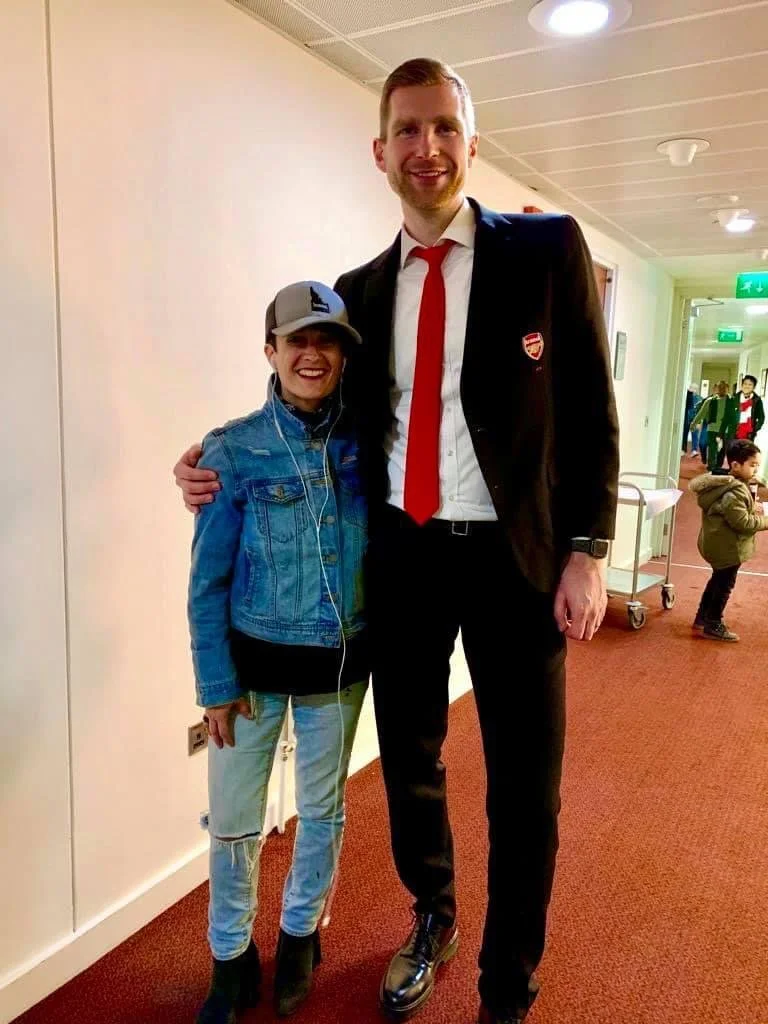
Sophie Nicolaou’s Arsenal story is rooted in North London, family, identity and the community around the club. Born and bred in Palmers Green, or ‘Palmers Greek’ as she calls it, she grew up in a mixed football household.
She worked at 20th Century Fox and Sony Pictures in London and Los Angeles, leading communications for major films including Star Wars, Charlie’s Angels and 24.
She presented USA Today's EPL Soccer Junkie and is a regular contributor on mainstream media talking Arsenal, but her main role has been founding the Highbury Squad podcast which brings together the Arsenal community and football world! For years, she presented it with the late, great Kevin Campbell and the show continues to attract a big audience of dedicated Arsenal fans.
When did you start supporting Arsenal and why?
It was a bit bizarre because my immediate family was not Arsenal at all. My dad was a Manchester United fan, my older sister was a Manchester United fan, my mum supported Stoke City because of Gordon Banks, and my brother ended up being a Tottenham fan. Weekends were an absolute nightmare at times, especially around the 8-2 period, because being around my dad and sister was painful.
When I was young, I loved Kevin Keegan. Every young kid loved Kevin Keegan. I would see Liverpool on the screen, Keegan, Kenny Dalglish, that whole thing, and the BBC was shoving Liverpool down people’s throats. My dad had come to England young, worked at the Ambassador Club in London and saw the footballers of that time, people like George Best and Bobby Charlton, so he fell in love with Manchester United because it felt glamorous and glitzy.
But then I would see my older cousins come over to aunts and uncles for Sunday Greek barbecues, wearing red and white, with their Gazelles on, looking super cool. They were talking about a different number seven, a guy called David Rocastle, and all of a sudden I became very curious and interested.
My uncle Zach would say, why do you want to support a team up north when you could support a team in your local area? Family outside my immediate family grabbed me and said, no, no, no, you’re going to support the Arsenal.
I was born and bred in North London, in Palmers Green, otherwise known as Palmers Greek, so not too far from Islington. Geographically, of course, I was much closer to Tottenham, but for some reason I never had any interest in them. With Greeks, you either went one way or the other. In the end, for me, it was Liverpool or Arsenal. It was never a question of Tottenham.
What was your first Arsenal match?
Growing up, it was interesting because I grew up in an era where girls really weren’t going to football matches in the same way. Women were going to games, but not too many. My parents were concerned about safety and my dad was working so much. My parents were immigrants and hard workers. They generally always worked on a Saturday, and I also had to go to Greek school on Saturdays and Wednesday nights. So I wasn’t really able to explore football in person until later.
My older cousins were too busy putting on their swag and their Gazelles and going to meet girls after games to worry about taking me. So I think it was after 1989, when I was old enough, working, with a little job and a little cash, that I got a ticket and finally went with my cousins. It was Anfield away in the 1990-91 season, and we won 1-0.
That was the almost Invincibles side, the most underrated Arsenal team of all time. It is a myth that we didn’t play good football under George Graham. Sure, we adopted the pragmatic attitude that got us competitive again, but that team was unbelievable. If Tony Adams had been available all season, that team could have gone unbeaten and been labelled one of the greatest English football teams of all time.
I thought beating Liverpool would be the norm, but the games against Liverpool have always been painful. They have always been a bogey team for us, so to beat them home and away that season was glorious. It was wonderful.
The feeling of going to the game for the first time was a little bit like seeing the sea for the first time. When we took road trips as kids to Folkestone, you would go over this road, then over a little hill, and suddenly see the sea in front of you and think, wow, that’s so beautiful.
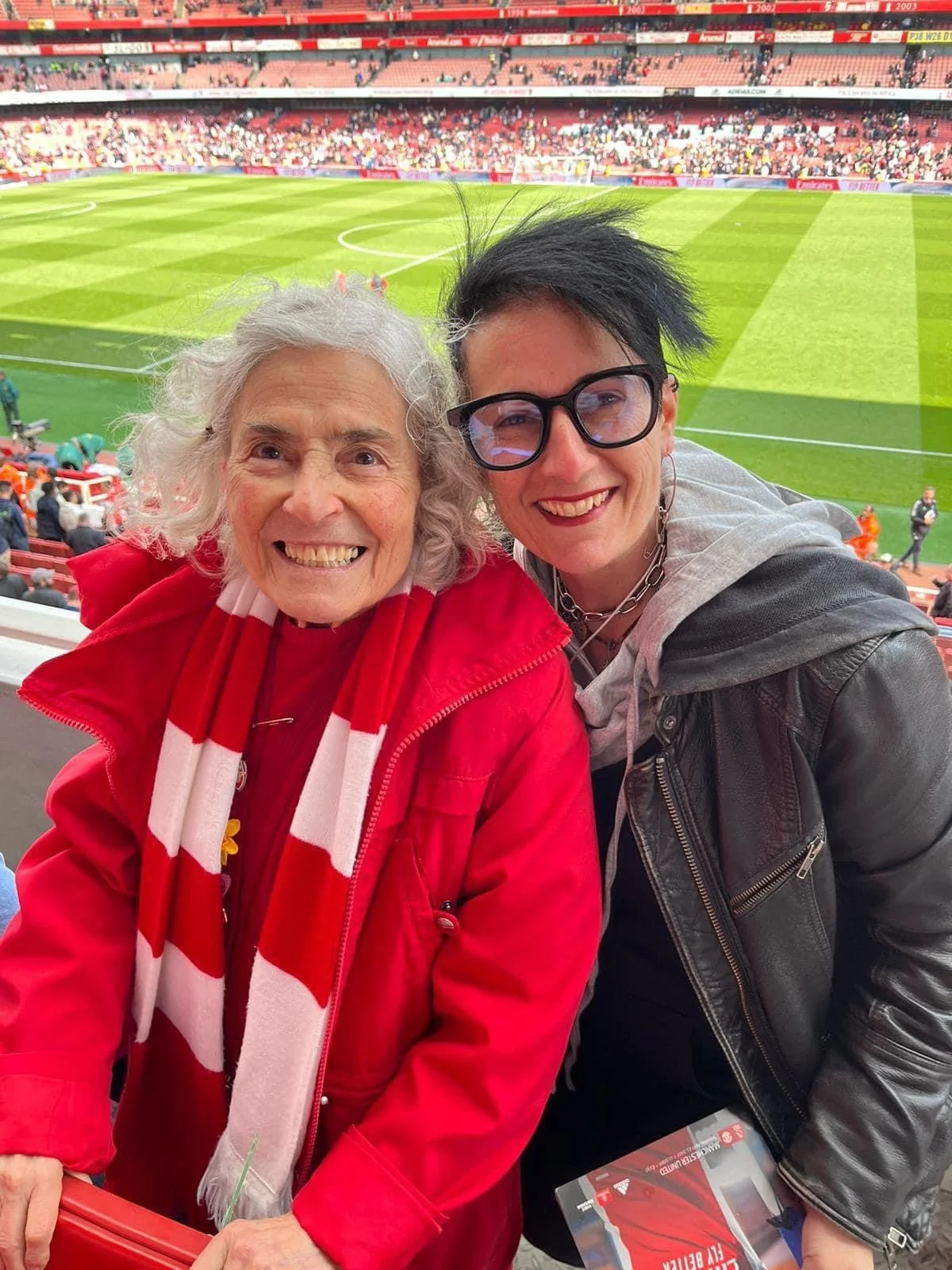
It is the same when you walk into a stadium and see the green grass for the first time, especially when it is a little bit empty. You are blown away by something so much bigger than yourself. It reels you in like a drug.
You can’t let go, but it is a beautiful drug. Still to this day, when I walk into a stadium and see the grass, it feels like the first time. It never gets old.
I was nine and it was Arsenal against Liverpool. The score was 1-1 and Paul Merson and John Barnes scored (April 18 1990, Barnes scoring a last-minute equaliser).
It was a hugely significant moment in my life. I remember walking up the stairs to the West Lower and seeing that pitch. I still remember the gasp of my breath as I saw Highbury for the first time.
It was a big moment because I'd been obsessed with football for a really long time, so the build-up to that first game was huge for me.
Who was your first Arsenal hero and why?
I have a hard time calling anyone a hero outside of my mum and dad. That is my truth. Rocky was someone I became educated about and learned to admire. For my cousins, Rocky and Paul Davis were everything. I still love listening to their stories about when they first went to see the Arsenal and saw players like Rocky out and about. Back in the day, fans would see players in pubs and around the area a little bit more.
But the person I admire most in that sense is Vic Akers. He is an unsung hero at Arsenal and someone who really helped put the women’s game on the map. He also did a lot more than that. He was a huge support to Arsène Wenger, especially when Wenger first came to the club.
People like Geordie Armstrong and Vic Akers were the backbone of Arsenal Football Club. Arsenal is not what it is today without people like that.
There was a time when things were tough. Vic was the kit man as well, and with the women’s team it was grassroots, built from the bottom up. Players were selling tickets and playing for Arsenal on a Saturday afternoon. Those stories are incredible.
As a woman, growing up playing football, there wasn’t anyone I could really identify with and there wasn’t a place I could go.
I tried to go on a trial and I was too small and too slight. So seeing what Vic did, what he did for the game, making it possible for women to play in the way they did, and the fact the club supported him and let him do that, is unbelievable.
I also had the pleasure of speaking to Emma Hayes and asking her about Vic. Her face lit up when she talked about him, his influence and what Arsenal meant to her because of someone like Vic Akers. It is a great legacy. If anyone deserves a statue at Arsenal, it is Vic Akers.
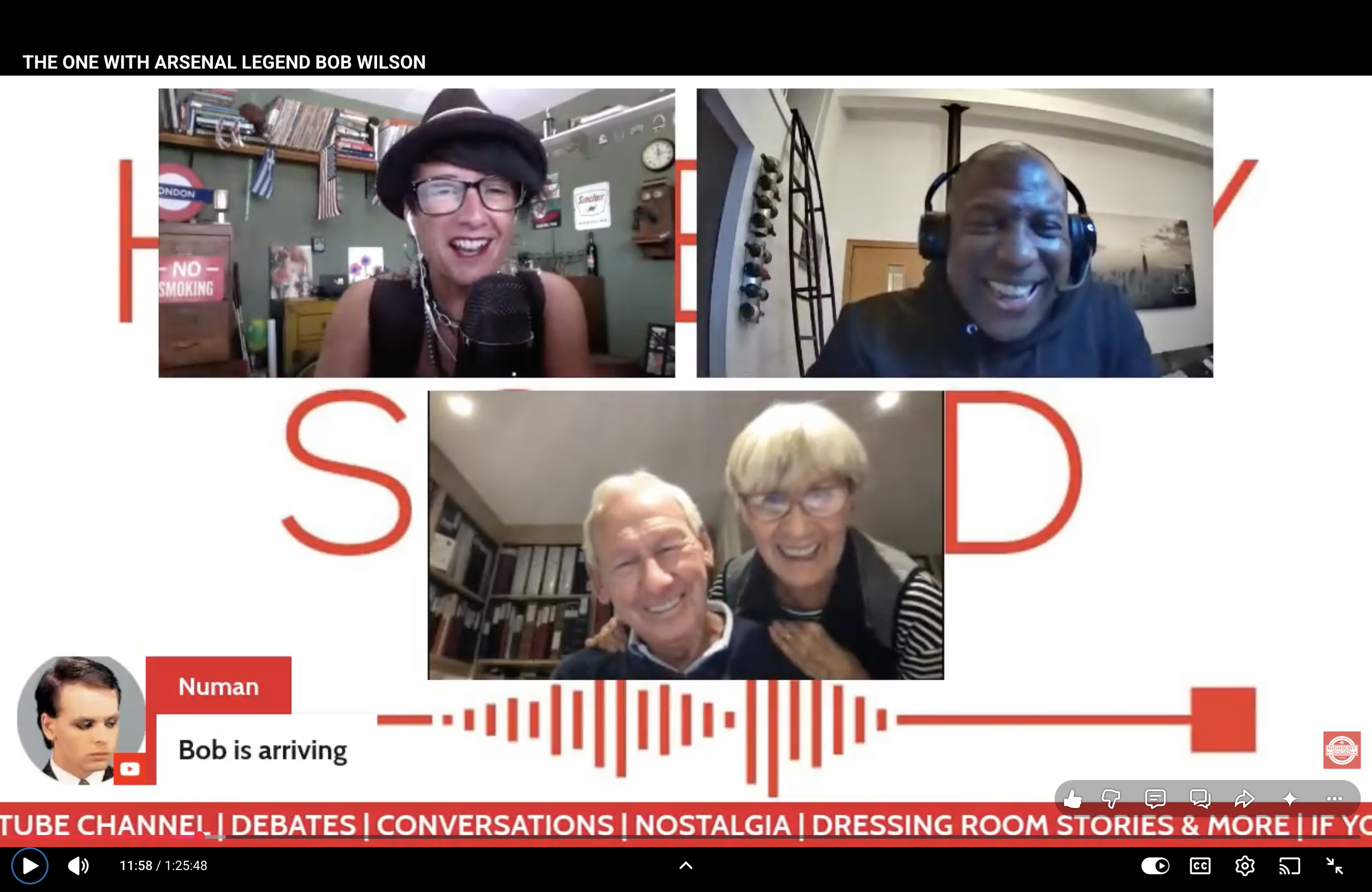
Bob Wilson is another absolute legend of this club. How is he not a Sir? The Willow Foundation, the work he and Megs have done over the years is truly heroic. When Bob Wilson came on Highbury Squad and I had a football conversation with him and the late, great Super Kevin Campbell, I literally had to pinch myself. It was pure magic.
The stories. The chemistry. The love for the Arsenal. Men who fought on the pitch for the badge. Winners! And more importantly, epic humans. To this day, that is undoubtedly one of Highbury Squad’s finest moments.
Who is your favourite ever Arsenal player and why?
We are so spoiled as Arsenal fans. It is like asking which one of your children you love the most. You love them all equally, but let’s be honest, you always have a little favourite. For me, it has to be Dennis Bergkamp, for so many reasons.
To me, Dennis Bergkamp is a football artist. The slogan for Highbury Squad is, ‘Let’s paint pictures, let’s tell stories,’ and every single time that man touched a ball or moved with it, I felt like he was painting a picture or telling a story. He was like a Picasso on the pitch. He was unbelievable, and he was ours. The fact he came to Arsenal was incredible.
People sometimes talk about whether he meant that Newcastle goal. Just stop the madness. Look at the player. He was a beautiful player who did beautiful things, but he also had a dirty side to him. There was a beastly side to the beauty of Bergkamp. I don’t think the Premier League has ever seen anything like him, and I don’t think it ever will. He is a player who, in any decade, at any time, would start in this Arsenal team.
I cannot believe he is not discussed more often as one of the greatest players of all time. I still sit there sometimes and think, how did we not win more with the talent we had?
For me, that will always be a football conundrum. How did we not win more with those players and Dennis Bergkamp? He was amazing.
His brain was in his feet. He had two brains, one where it was supposed to be and another in his feet. I don’t think Bergkamp gets enough credit for the brain in those two feet.
He was on another level. He thought about the game two minutes ahead of everybody else. It was magic.
Speaking of magic…I have to give an honorable mention to Gilberto Silva. Much like Mikel Merino in today’s team, he has always felt like an unsung hero. What a class act. A selfless player. Such elegance. Players like Gilberto Silva work in the shadows. An invisible wall on the pitch but a player so visible in his contributions and now in his role as ambassador.
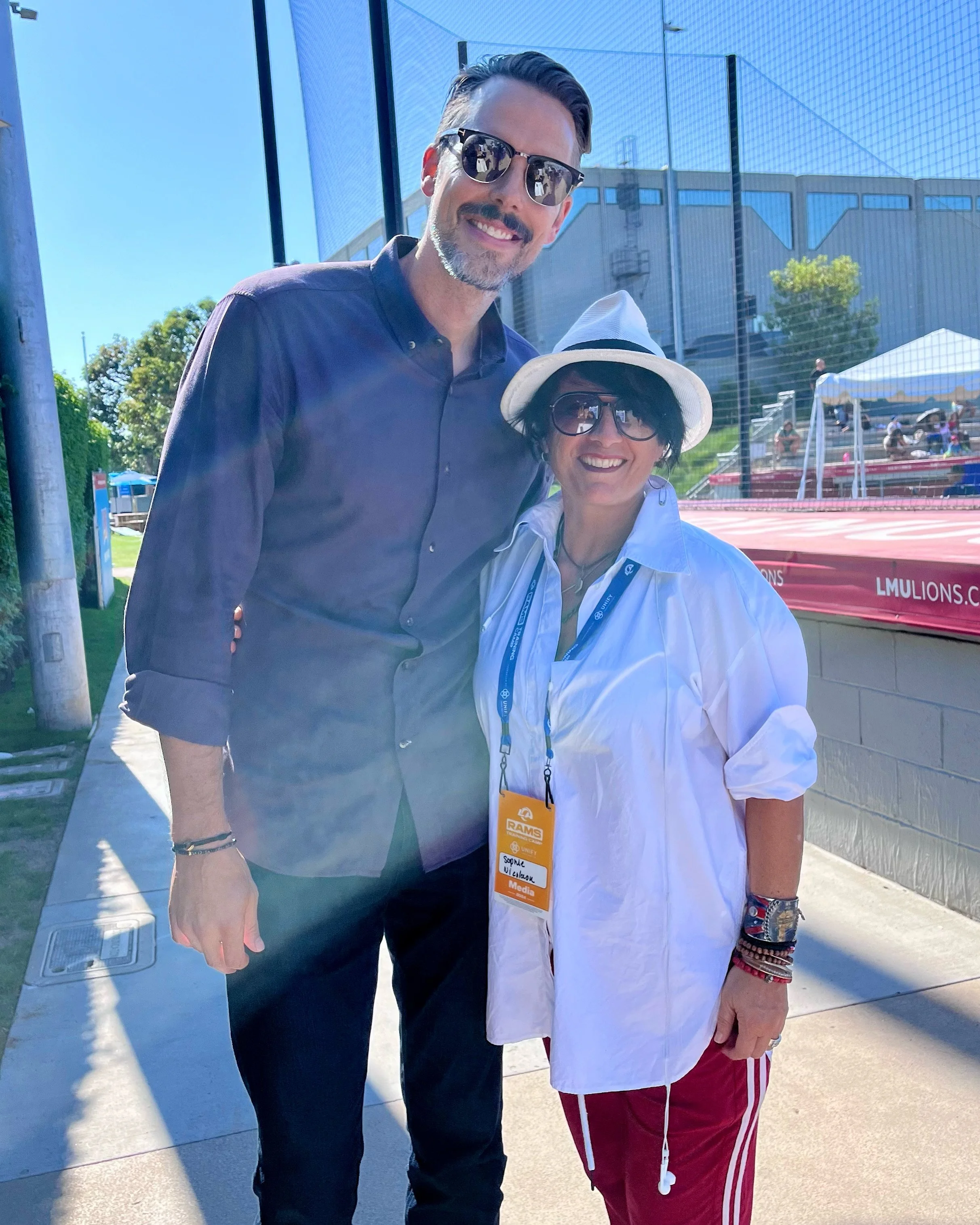
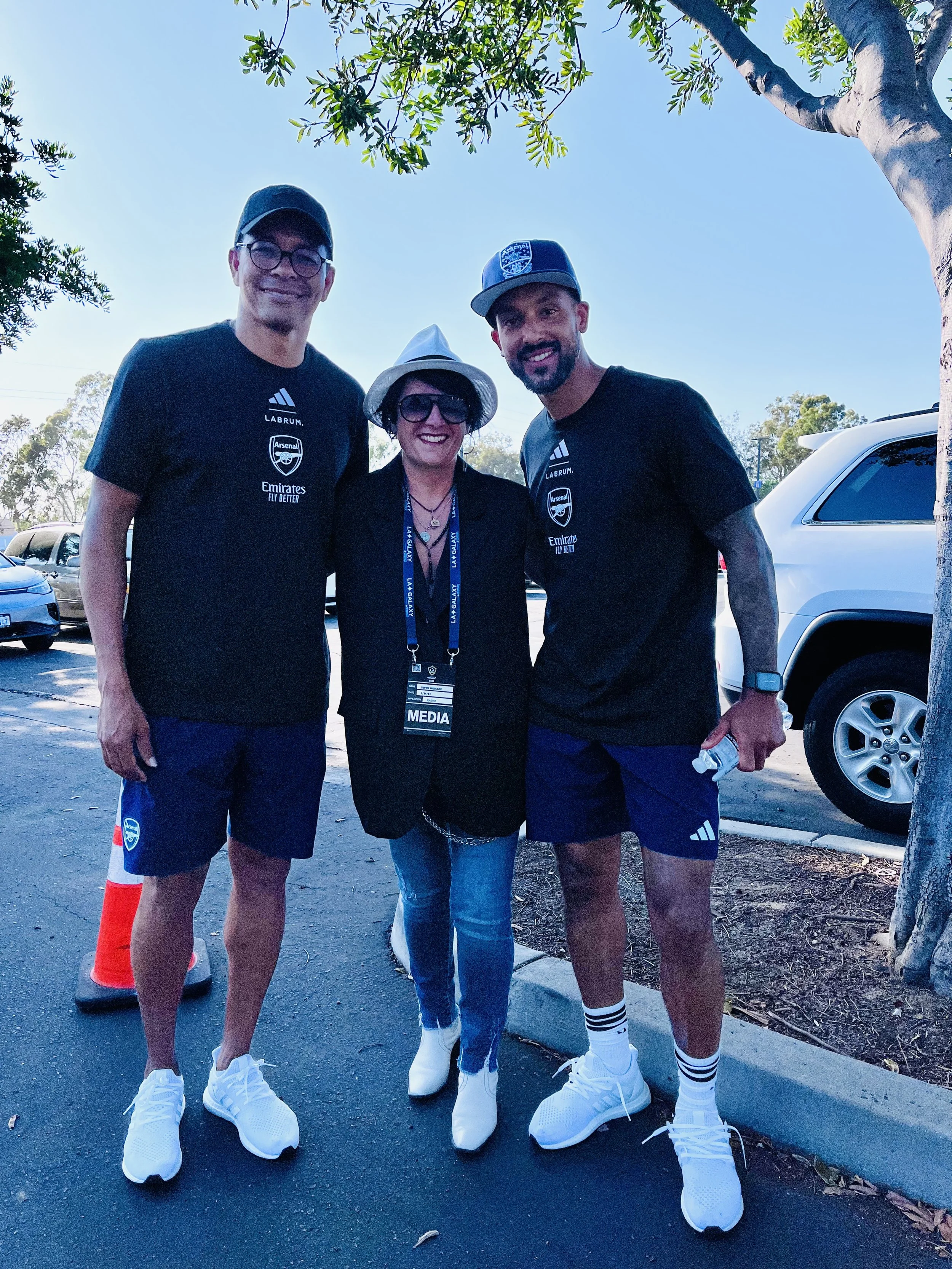
I got to meet him in Los Angeles. We had a wee one-on-one. He was so engaging. Now here’s a player who wasn’t born in North or South London or anywhere in England yet, the way he spoke and articulated himself, he sounded like he’d been born at the club. I’ll never forget he talked to me about transmitting a feeling, an experience, what it’s like to play for this club, to be in the dressing room.
To wear the shirt. How Mikel can do that. You digest that information so differently when someone of Gilberto’s stature is sitting in front of you expressing his own version of being a Gunner. This club. The moments. The players. The legacies. To even meet one man who has worn the shirt is a treat. To have met a few feels beyond lucky.
What’s your biggest Arsenal regret/disappointment?
It is really obvious to talk about losing cup finals, but once you get to a cup final there is always a chance you could lose. I have conditioned myself to go into those games knowing that is possible. The 2006 Champions League final was gutting. Barcelona were still the dons, but it felt like a game we could win. Messi gets all the plaudits, but there is no legacy for Messi without Iniesta, Xavi and Busquets, and that legacy got lucky on that day. It was fine margins, a hair’s breadth, the size of a nail.
But for me, the biggest disappointment was that era of brutal results against fierce rivals. The 8-2 at Manchester United was the low point as an Arsenal fan. That was truly a time where I felt there was no hope. That era, the 4-4 at Newcastle, the 5-1 at Liverpool, the 6-0 at Chelsea, the 10-2 against Bayern, the 4-1 to Barcelona. Some Arsenal fans have no idea where we have come from and how much pain we have suffered.
When you look at those results, I can’t believe Arsène Wenger kept his job, because those were brutal results to fierce rivals. We were embarrassed. The FA Cups we won under Wenger masked the pain. They were band-aids. It wasn’t real, what was happening.
I can take losing a cup final if you lose it in an honourable manner, but that period, being that club, that was not the Arsenal Football Club we should have been. That was bad. It was tough. I don’t know if there has ever been a manager who brought a club so far forward and then took them so far back at the same time.
What is your favourite ever Arsenal match?
I look at this a little bit differently now. It would be easy to say this cup final or that cup final, but I am so happy the Emirates era finally had its moments. It was getting out of hand. You can’t claim to be a massive club and not have won a title in your own stadium. The Emirates was becoming a shell, but over the last two or three seasons, the youth, the energy and the vibe coming into the stadium have been amazing.
I really wanted to stop continually looking back at Highbury for my favourite matches or favourite moments. This team, this club and this fan base needed new heroes, new moments and new stories to tell. They didn’t have too much of that from the Emirates.
I wasn’t there for the Reiss Nelson goal against Bournemouth, but I was there for Eddie Nketiah’s 3-2 goal against Manchester United, which was just as important in a different way. I remember standing there during the celebrations and thinking, I’ve never seen this stadium like this before. My hairs go up just thinking about it. Finally, things were happening here. Finally, there was a culture, a movement, energy and fullness. You couldn’t get a seat. It was beautiful to see that in this stadium.
We had been sitting on bragging rights from yesteryear while our rivals were winning titles. We needed this title so badly: the manager, the players, the owners, the staff, the fans, but most of all the Emirates needed that title. The Emirates symbolises Mikel Arteta’s Arsenal, and Arsenal 2.0 under Mikel Arteta needed a signature moment. They delivered big time.
So I would twist the question a little and say my favourite matches are those moments over the last two or three seasons that built towards winning the title at the Emirates. The Declan Rice free-kicks against Real Madrid, the Eddie goal, the Reiss goal, those last-minute moments, that never-say-die attitude. Those are Emirates moments now. They led to something and gave the stadium that X factor at home.
What is your favourite Arsenal memory (away from the pitch) and why?
This is a really easy one for me, but also a hard one. It is doing the podcast with Kevin Campbell, with Super Kev. Watching a player and having so much admiration for anyone who wears an Arsenal shirt is one thing, because they are living our dream.
That is why there is so much love for Bukayo (Saka) and Myles (Lewis-Skelly), and anyone who comes through the academy. But knowing how much Kevin loved being an Arsenal player, what it meant to him as a South London boy, and how much it meant to play with those boys, with Paul Davis, Rocky and the others, made it even more special.
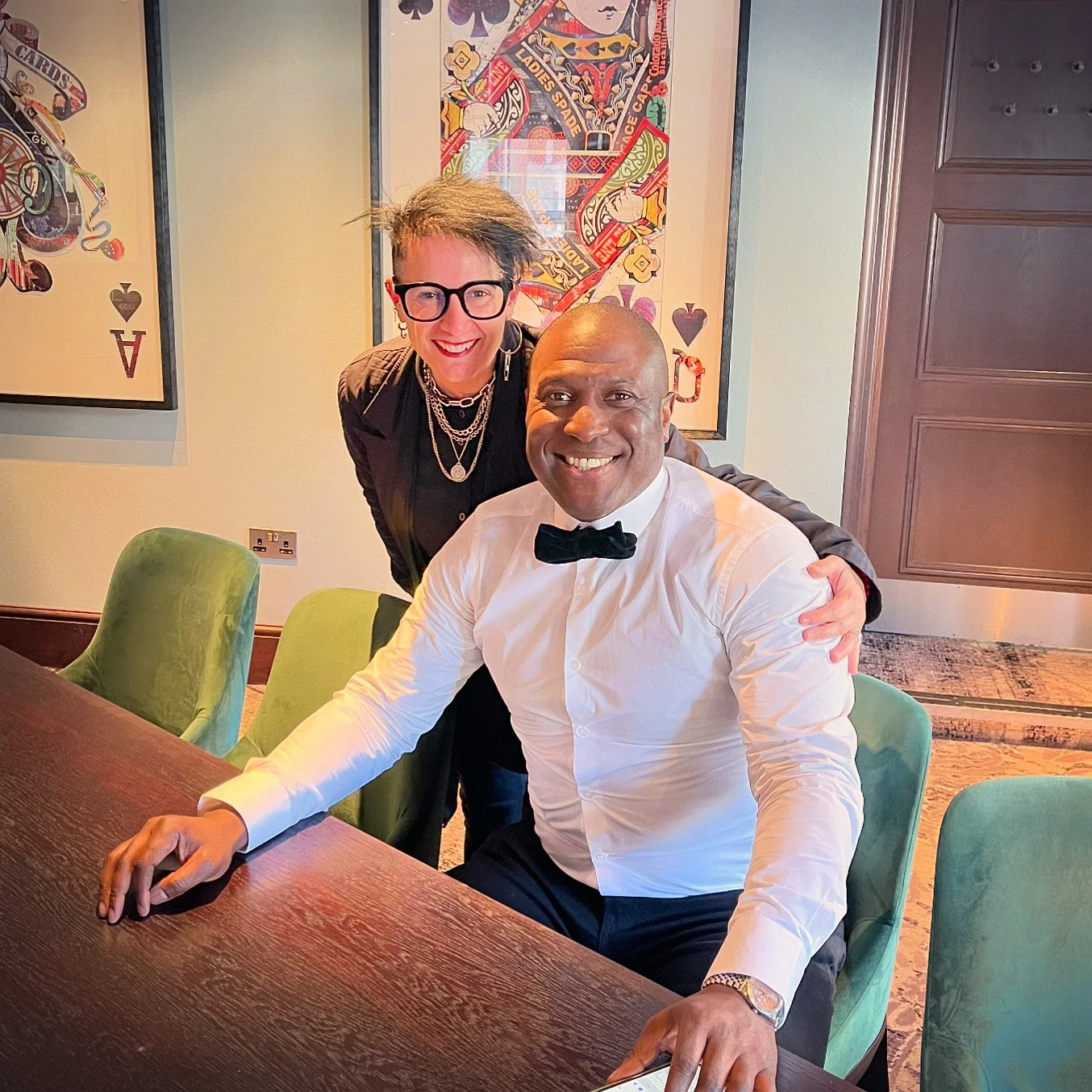
I met Kevin in Los Angeles about 10 years before we started doing the podcast together. I was doing a live show called World Football Daily, and the producer told me I would be happy with the guest. I walked in and it was Super Kev. He was just an amazing human being. A few years later he came on the show as a guest, we connected, and we became like brother and sister.
The show really took flight during Covid, which was such a difficult time for so many people. We were doing the show every night and people around the world would tell us we were helping them. Kevin would always say, ‘Well, you are helping us too.’
Connecting Kevin with the fans is one of the proudest things I have done through the show and through the community, because I know what it meant to listeners and to people who interacted with him through Highbury Squad. He was real, genuine, and he cared about people. He was the first player to truly embrace the YouTube community. He gave everyone time.
Doing the show and talking football with an Arsenal legend was an unbelievable full-circle moment. I learned a lot from Kevin about life, not only football: how to be strong, the mind of an athlete and the sacrifices you have to make. He taught me about patience and seeing the game through the players’ eyes. I truly think I became a better fan through understanding the game through his eyes a little bit more.
Kevin would always end the show by saying, don’t forget to tell your loved ones you love them. When he passed, it felt like all the things he had talked to us about, all those lessons, had prepared us for the moment. He taught us about life being precious and about saying those things out loud.
I did not want to carry Highbury Squad on without him, but he made me promise. He said I was not going to stop after everything we had done together. As long as I feel I can, I will. It is part of his legacy too, and I am proud to be an ambassador of the Kevin Campbell Foundation.
To find out more about Highbury Squad, please click HERE